Tuesdat, 30 December 2025| Dubai, UAE (Posted at 2:50 pm, Updated at 2:53 pm)
Al Ain City Municipality has introduced an advanced smart road monitoring project aimed at improving road quality, enhancing safety, and supporting long-term sustainability across the city and surrounding areas. The campaign uses cutting-edge technologies like artificial intelligence (AI), laser scanners, LiDAR, and ground-penetrating radar to collect and analyse detailed data on road conditions.
City-Wide Coverage with Data-Driven Planning
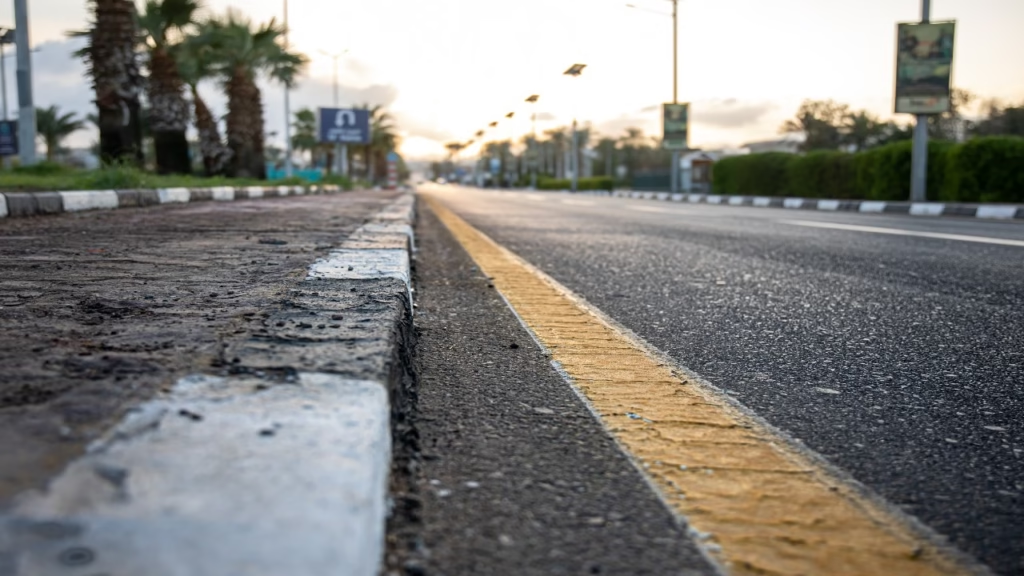
According to Engineer Rashid Hamad Al Nuaimi, Director of the Assets Management Department at Al Ain City Municipality, the project covers AI in roads in Al Ain. It includes urban streets and external routes connecting nearby areas.
Data had already been collected for 2,551 km of roads. Hence, it demonstrates the scale of this project. 1005.77 km out of the collected data has been fully analysed using a smart digital system. However, the remaining data set is to be processed in the coming phases.
The detailed coverage ensures that road maintenance decisions are based on real, on-ground conditions rather than estimates or reactive reporting.
Read more – Crucial Travel Advisory for New Year Weekend Passengers
Lasers, LiDAR and Radar to Detect Road Defects Early
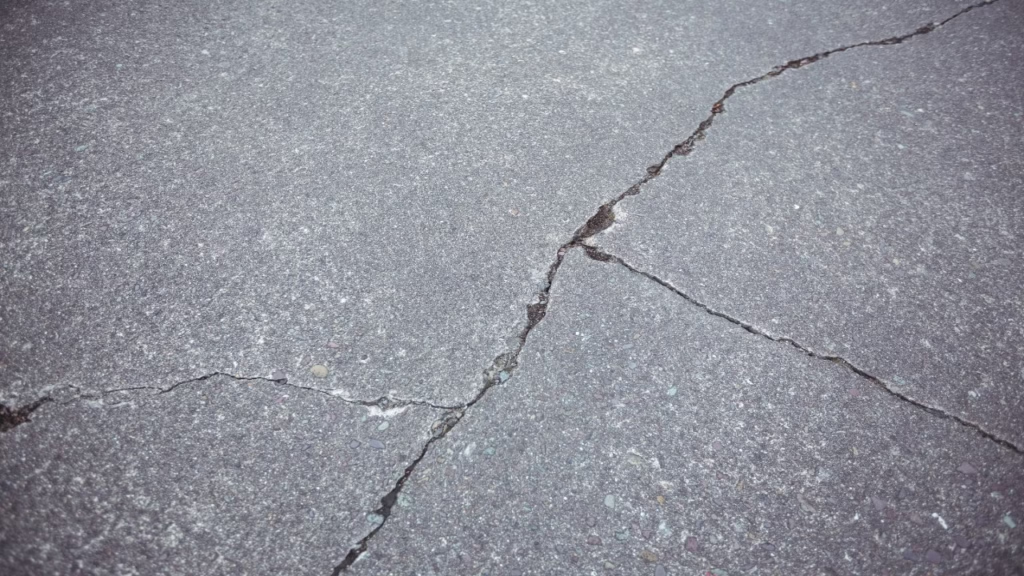
The use of high-precision laser technology is at the core of this project, which assesses asphalt surfaces in detail. These systems could detect the following early-stage issues:
- Cracks and surface deformities
- Ruts caused by heavy vehicle movement
- Variations in road roughness affecting driving comfort
Ground-penetrating radar is also being used to measure the pavement thickness and analyse the structural layers beneath the road surfaces. It allows engineers to identify hidden weaknesses before they become major failures.
In contrast, LiDAR technology also plays an important role by scanning road assets like pavements, curbs, lighting poles and surrounding infrastructure. The data is used to create accurate 3D digital models to give authorities a complete visual and structural understanding of road conditions.
AI algorithms and geographic information systems (GIS) support all collected data. Hence, it significantly improves accuracy, speed of analysis, and long-term planning capabilities.
Read more – Dubai RTA Now Lets Residents Report Road and Transport Damages via WhatsApp
Smart Road Monitoring – Improving Road Safety Through Preventive Maintenance
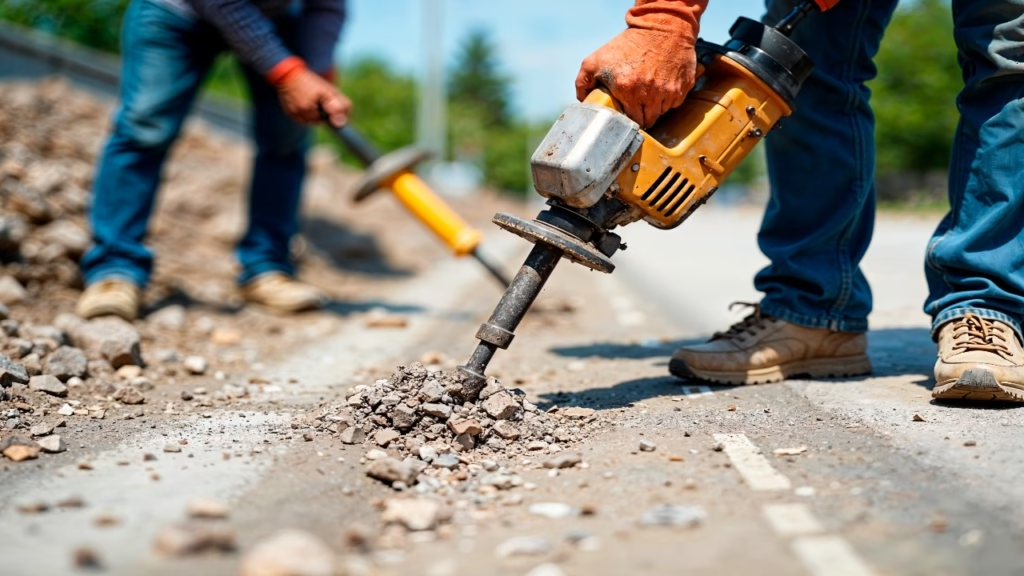
Engineer Al Nuaimi explained that enhancing road safety by identifying serious defects at an early stage is one of the main goals of the project. Early detection using Al Ain Smart Road Monitoring allows faster intervention, reducing the risk of accidents caused by damaged or uneven road surfaces.
The project is also a shift from costly emergency repairs to planned and preventive maintenance. The municipality can reduce maintenance costs, extend the lifespan of roads, and reduce traffic disruption by addressing issues before they escalate.
Authorities will use this collected data to develop long-term maintenance strategies. Hence, it ensures that investments are prioritised based on actual road conditions rather than a fixed schedule.
Read more – Rain Likely in Northern and Eastern Regions as Temperatures Drop
Smart Transport Trends Across Abu Dhabi
The Al Ain initiative aligns with wider smart transport developments across Abu Dhabi, where government entities are increasingly using traffic data and AI tools to manage roads more effectively.
These technologies give real-time insights into traffic flow, incidents, and congestion patterns. Hence, it helps authorities improve route planning, reduce delays, and schedule road and bridge maintenance more effectively.
Read more – Dubai Police AI Traffic System Revolutionizes Road Safety with Smart Violation Detection
Abu Dhabi’s AI Initiatives with Google
Abu Dhabi’s Integrated Transport Centre has also introduced 2 AI-powered initiatives in collaboration with Google to support sustainable mobility in a related move.
The green light project is the first initiative. It analyses traffic movements at intersections and recommends improvements to traffic signal timing. Hence, it helps ease congestion and reduce vehicle emissions.
The second initiative uses Google’s AI platform and Google Maps data to predict traffic patterns and congestion hotspots. It allows authorities to take early action to manage traffic flow and improve the commuter experience due to real-time updates on incidents.