
21 February 2026| Dubai, UAE| [Posted at 3:30 pm]
NASA has officially classified the Boeing Starliner failure during its 2024 crewed mission as a “Type A” mishap, the agency’s most serious category. For UAE residents following global space developments, especially with the rise of the UAE’s own astronaut programme, this development is significant. Here’s what happened, why it matters, and what comes next.
Related Reads: Dubai Aerospace Enterprise Doubles Profit to $653 Million in 2025 After NAC Integration
UAE Space Sector Soars with Landmark Achievements in 2025
What Happened During the Starliner Mission?
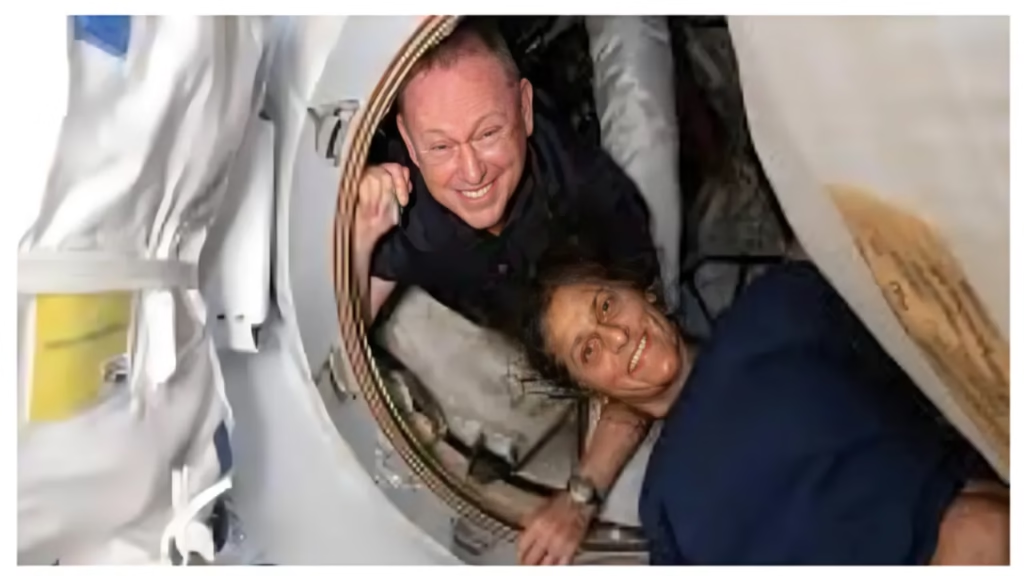
Overview: The mission was meant to last just over a week, but turned into a nine-month ordeal.
The Boeing Starliner spacecraft launched in June 2024, carrying astronauts Butch Wilmore and Sunita “Suni” Williams to the International Space Station (ISS). Shortly after launch and during docking, major propulsion and thruster issues emerged.
Here’s what went wrong:
- The capsule temporarily lost full control of its motion.
- Engineers struggled to assess real-time safety risks.
- The spacecraft could not safely return the crew to Earth.
Instead of an 8–14 day mission, the astronauts remained aboard the ISS for nearly nine months. They finally returned in March 2025 aboard a SpaceX Crew Dragon capsule.
The Boeing Starliner failure quickly became one of the most discussed space incidents in recent years.
Why NASA Declared It a “Type A” Mishap
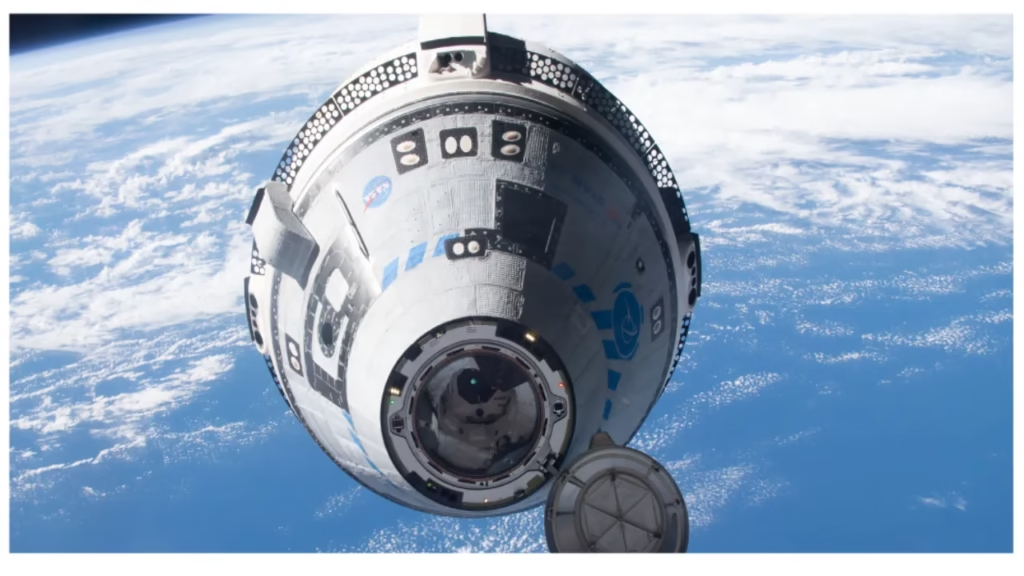
Overview: “Type A” is NASA’s highest-level incident classification.
A “Type A mishap” is reserved for:
- Incidents involving potential loss of life
- Loss of a spacecraft
- Major financial damage (over $2 million)
- Situations with catastrophic risk
NASA confirmed that although no injuries occurred, the risk level justified the highest classification.
This places the Starliner incident in the same severity category as the 1986 Challenger and 2003 Columbia disasters, though without fatalities.
NASA Administrator Jared Isaacman said:
“Starliner has design and engineering deficiencies that must be corrected, but the most troubling failure was decision-making and leadership.”
The agency accepted shared responsibility, stating it approved the vehicle and launched the crew despite prior technical warning signs.
Read More: Microsoft Xbox Gets New CEO: Asha Sharma’s Big Plan for the Future of Gaming in the UAE
What the Investigation Report Revealed
Overview: A 300+ page report exposed technical, managerial, and cultural issues.
The independent review found:
- Hardware deficiencies in propulsion systems
- Poor engineering oversight
- Inadequate communication between teams
- Leadership decisions that prioritised progress over caution
- Cultural issues affecting safety transparency
According to NASA, personnel felt overwhelmed during crisis meetings and raised concerns about data transparency.
The Boeing Starliner failure was therefore not just technical; it was organisational.
Boeing’s Response and Future of Starliner
Overview: Boeing says reforms are underway, but Starliner won’t fly crew soon.
Boeing acknowledged the seriousness of the findings and committed to technical and structural reforms. Key developments:
- Full redesign and testing of faulty thrusters
- Improved oversight processes
- Enhanced transparency in engineering reviews
- Leadership accountability reforms
NASA confirmed the Starliner will not carry astronauts again until all safety standards are met. This affects Boeing’s competitiveness against SpaceX in NASA’s Commercial Crew Program.
Lessons Learned from the Boeing Starliner Failure
Overview: This incident reshapes NASA’s internal accountability.
Before returning to routine missions, systemic corrections must happen. NASA leadership has pledged:
- Stronger safety-first culture
- Improved cross-team communication
- Greater transparency in risk reporting
- Clear accountability at senior levels
The agency has accepted the final report and confirmed that corrective measures are in progress. The Boeing Starliner programme remains active, but under stricter scrutiny than ever before.
FAQs
1. What is the Boeing Starliner failure?
2. What does “Type A mishap” mean?
3. Were the astronauts injured?
4. Will Starliner fly again?
5. Why is this important for the UAE?
Conclusion
The Boeing Starliner failure is a turning point for NASA and Boeing. While no lives were lost, the classification as a “Type A” mishap signals how close the mission came to disaster. For the UAE and the global space community, the message is clear: Innovation must never outpace safety.