Posted: 28 February 2026, Saturday at 7:03 pm| Dubai | Edited: 28 Feb 2026, Saturday at 7:03 pm
The Middle East has entered a dangerous new phase after Iran strikes back at United States military assets across multiple Gulf nations. What began as a joint US–Israel operation against Tehran has now escalated into one of the most serious regional security crises in recent years.
Related Reads: Israel Attacks Iran Today: Massive Strikes, Missile Retaliation & What Happens Next
Qatar Emergency Alert: Stay Indoors Order Issued After Missile Interception Across Gulf
Qatar Airways Flight Suspension Today: Doha Operations Halted After Airspace Closure
United Arab Emirates: Al Dhafra Air Base Targeted
Overview: The UAE faced direct missile threats targeting key military infrastructure, marking a sharp escalation.
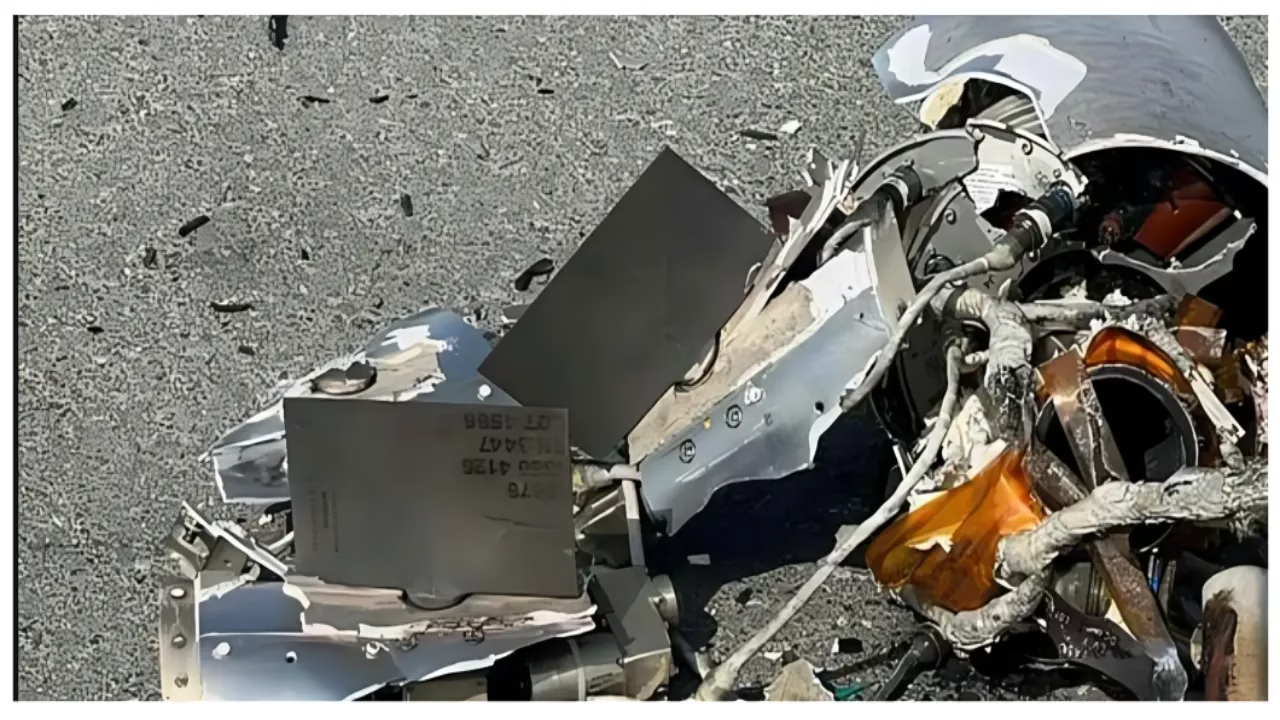
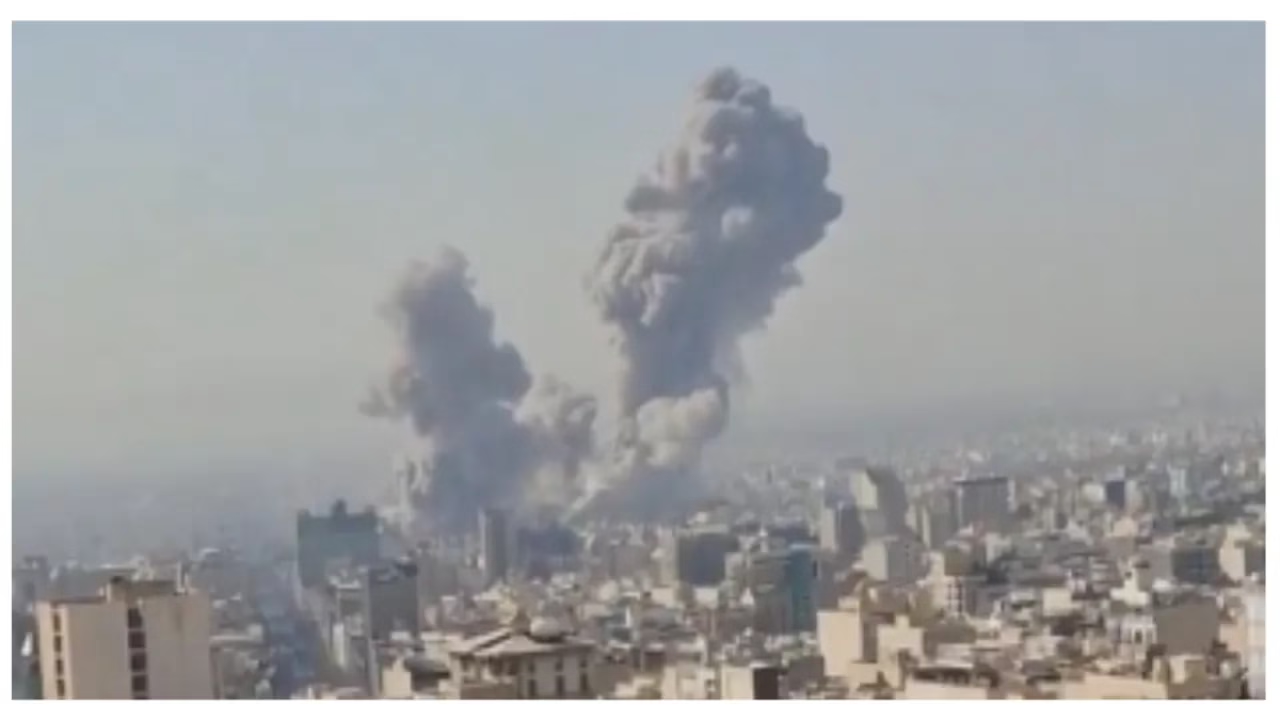
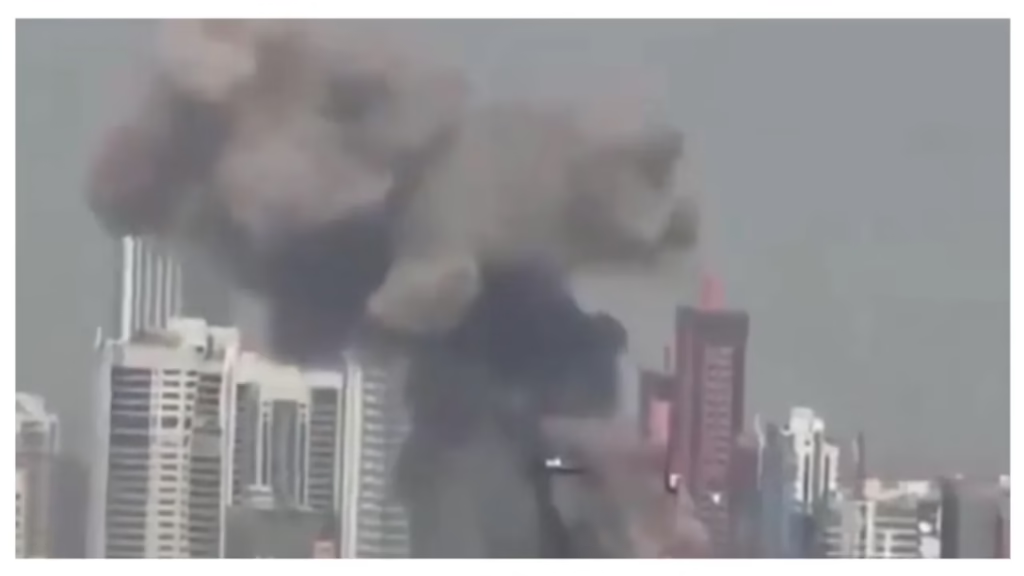
Multiple explosions were reported in Abu Dhabi after Iran strikes UAE military-linked sites. The primary target was Al Dhafra Air Base, a joint UAE–US installation.
Here’s what we know:
- UAE air defence systems intercepted several incoming missiles.
- At least one fatality was reported in Abu Dhabi.
- Authorities temporarily closed parts of the country’s airspace.
- Residents near the Corniche reported powerful shockwaves.
The UAE condemned the attacks as a violation of sovereignty, as Iran strike news continues to dominate global headlines.
Bahrain: US Fifth Fleet Comes Under Fire
Overview: Bahrain became a central flashpoint due to its hosting of a major US naval command.
Bahrain confirmed that a missile attack targeted the headquarters of the US Navy’s Fifth Fleet in Manama.
Key developments include:
- Thick smoke was seen rising from the Juffair district.
- Officials called the strike a “blatant violation” of national security.
- Air defence systems were activated across the kingdom.
The development has intensified fears that maritime security in the Gulf could be directly threatened.
Kuwait: Ali Al-Salem Air Base Intercepted
Overview: Kuwait’s defence systems successfully neutralised incoming threats.
Reports confirm that Iran strikes Kuwait by targeting Ali Al-Salem Air Base, a major US Army Central logistics hub.
Authorities stated:
- Multiple ballistic missiles entered Kuwaiti airspace.
- All missiles were intercepted before impact.
- Commercial flights were suspended temporarily.
- Aviation routes were adjusted across the Gulf.
Kuwait’s swift interception prevented major damage, but tensions remain high.
Qatar: Al Udeid Air Base Under Threat
Overview: Qatar’s role as a US forward headquarters placed it squarely in the line of fire.
Al Udeid Air Base, home to US Central Command’s forward headquarters, was targeted in the broader retaliatory campaign.
Officials confirmed:
- Incoming missiles were detected and intercepted.
- Emergency sirens were activated at the base.
- Shelter-in-place advisories were issued for US nationals.
- Qatar temporarily closed its airspace.
Explosions heard in Doha were believed to be defence interceptors neutralising threats mid-air.
Saudi Arabia & Regional Spillover
Overview: Though details remain unclear, the security situation extended beyond initial targets.
Explosions were reported in Riyadh shortly after strikes elsewhere in the Gulf. It remains uncertain whether these were direct hits or interception operations.
Meanwhile:
- Airspace over Iran, Iraq, Israel, and the Gulf states saw major disruptions.
- Airlines rerouted or cancelled flights.
- Global oil markets reacted sharply to the iran strikes back escalation.
The risk of supply chain and energy disruptions has added an economic layer to the crisis.
Read more: Sri Lanka Easter Bombings: Ex-Intel Chief Suresh Sallay Arrested in 2019 Easter Sunday Attacks Case
What Triggered the Iran strikes back?
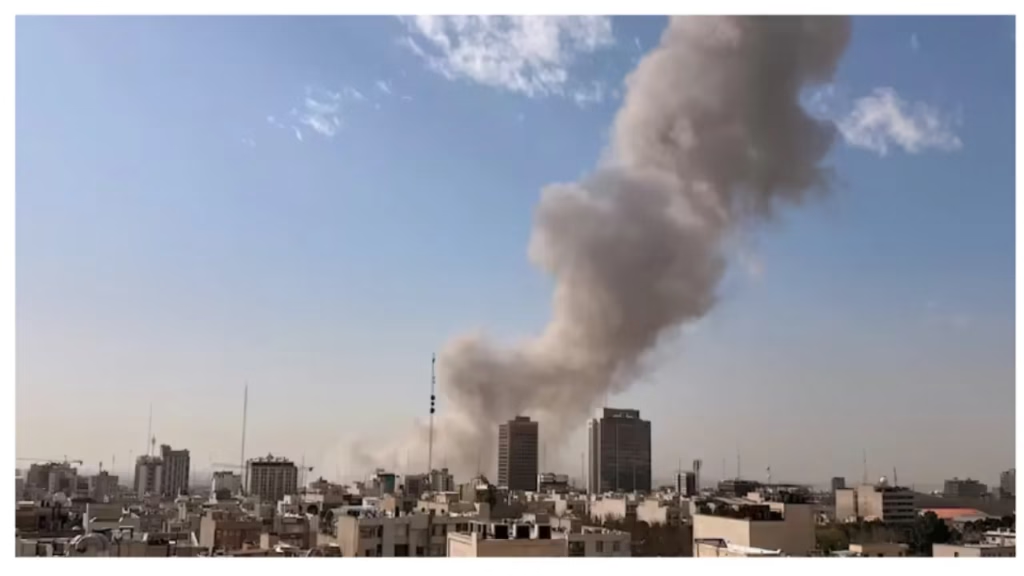
Iran’s Islamic Revolutionary Guard Corps stated that all US military assets in the region are now considered legitimate targets. Iranian officials described the action as defensive retaliation after US and Israeli strikes inside Iran.
Diplomatic efforts, particularly those involving Oman as a mediator, appear to have collapsed. Analysts warn that Iran strikes Dubai, Abu Dhabi and other Gulf cities signal a shift from proxy tensions to confrontation.
As the crisis unfolds, regional observers note that Iran strikes Abu Dhabi and other capitals represent one of the most significant military escalations in the Gulf in decades.
FAQs
1. Why did Iran launch these attacks?
Iran says the strikes were retaliation for US and Israeli military actions targeting Iranian assets.
2. Were the Iran strikes back successful?
Most Gulf nations reported successful interceptions by air defence systems, limiting damage.
3. Is the UAE safe for residents and tourists?
Authorities have activated advanced defence systems and temporarily adjusted airspace operations as precautionary measures.
4. Could this turn into a wider regional war?
Security analysts warn that the risk is high if diplomatic de-escalation fails.
5. How are global markets reacting?
Energy markets have shown volatility due to fears of oil supply disruptions.
Conclusion
The latest wave of missile attacks marks a turning point in Gulf security dynamics. As Iran strike news continues to unfold, the region stands at a crossroads between escalation and urgent diplomacy.
Read more: UAE Travel Advisory Update: New Safety Rules for Citizens Travelling Abroad in 2026