

Tuesday, 27 January 2026| Dubai, UAE [Posted at 6:05 pm| Updated on 4 February 2026 at 5:13 pm]
A recent Nipah virus outbreak in India has prompted heightened alertness across Asia, with several countries tightening airport health screening measures for incoming travellers. While the number of cases remains limited, the virus’s high fatality rate and lack of a vaccine have renewed regional vigilance—especially for international travel.
Related reads – H3N2 Flu Surges in UK: NHS Issues Flu Jab SOS Warning
What Is Subclade K and Why Doctors Are Concerned This Winter
UAE Health Experts Urge Early Flu Vaccination
What Is the Nipah Virus?
Overview: Nipah virus is a zoonotic disease with a high fatality rate
Nipah virus is a zoonotic disease. It means that it spreads from animals to humans and can also be transmitted between people through close contact. Fruit bats and pigs mainly carry the virus. It can spread via:
- Contaminated food (like unwashed fruits or raw date palm sap)
- Close human-to-human contact
- Exposure to the bodily fluids of infected individuals
The World Health Organization (WHO) lists Nipah among its top priority pathogens, alongside Covid-19 and Zika, due to its epidemic potential.
Why the Nipah Virus Outbreak Is Back in Global Focus

Overview: A fresh Nipah virus outbreak in India has raised alarm across Asia, prompting multiple countries to tighten airport health screening measures.
Airports in Thailand, Nepal, Taiwan, and parts of East Asia have reintroduced Covid-era style surveillance, including temperature checks, health declarations, and monitoring of passengers. The concern stems not from widespread transmission, but from Nipah’s extremely high fatality rate and lack of a vaccine.
For UAE travellers, especially those flying to or from India, understanding the situation is essential—not to panic, but to stay informed and prepared.
Nipah Virus Outbreak in India: What’s Happening Now
Overview: The current Nipah virus outbreak in India has been reported in West Bengal, an area known to be endemic to the virus.
Key facts:
- Five confirmed cases, all healthcare workers
- One patient remains in critical condition
- 100–200 close contacts under surveillance or quarantine
- Outbreak linked to a private hospital in Barasat
- Kerala and West Bengal remain India’s primary Nipah-endemic regions
Indian health authorities have stated that the situation is under control, with aggressive contact tracing and isolation protocols in place. However, experts warn that Nipah’s mortality rate ranges from 40% to 75%, making early detection critical.
Why Asian Countries Are Tightening Airport Health Screening

Overview: Although no cases have been reported outside India, the high fatality rate has triggered regional vigilance.
Countries stepping up airport health screening:
- Thailand
- Nepal
- Taiwan
- Heightened attention in China ahead of Lunar New Year travel
China’s CDC has called for “heightened vigilance” during the mass travel period (February 2 to March 13), when millions are expected to travel domestically and internationally.
How Airport Health Screening Works for Nipah Virus
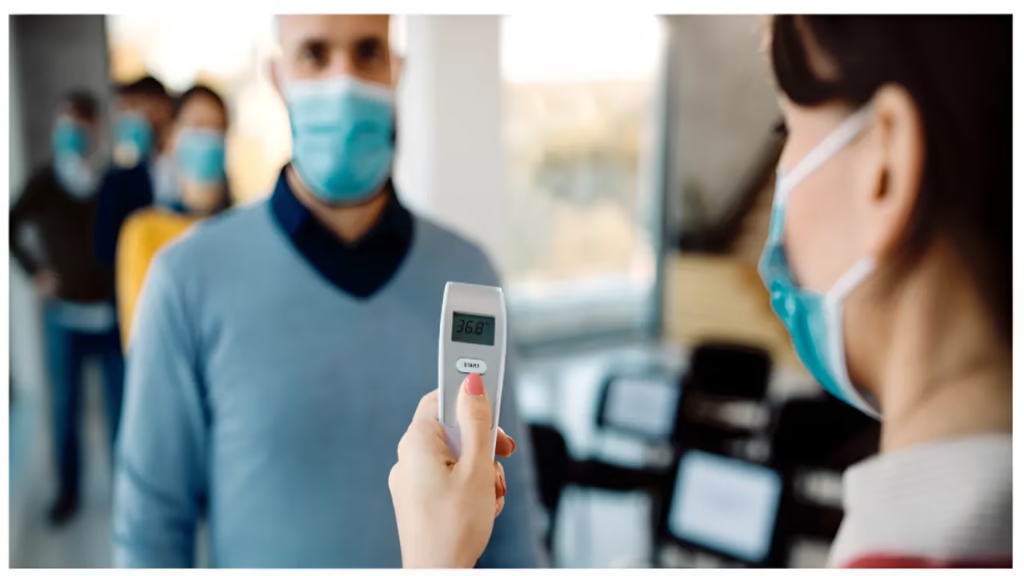
Overview: Airport health screening is a preventive triage measure, not a diagnostic test.
Airport screening aims to identify potentially symptomatic travellers early. Common screening measures include:
- Temperature scans (≥38°C flagged)
- Health declaration forms
- Visual assessment for breathing difficulty, fatigue, or confusion
- Travel history checks
- Referral and isolation of symptomatic passengers
Unlike COVID-19, Nipah is not airborne; there are no rapid airport tests, and confirmation requires lab-based RT-PCR testing.
Read more – UAE to Launch National Unified Health Licensing Platform by 2026
The New ‘ChatGPT Health’ Feature: A Game Changer or a Privacy Nightmare?
Country-Wise Airport Screening Measures
Overview: Many countries are taking precautionary measures.
Thailand
Thailand has reintroduced strict screening at major airports receiving flights from West Bengal. Measures include:
- Screening at Suvarnabhumi, Don Mueang, and Phuket airports
- Mandatory temperature checks
- Health declaration forms
- Isolation for symptomatic travellers
- Issuance of Health Beware Cards that advise travellers to seek medical help if they develop fever, headache, muscle pain, sore throat, etc.
Nepal
It has strengthened checks at both air and land entry points. Key measures are:
- Screening at Tribhuvan International Airport
- Health desks at major land borders with India
- Medical follow-ups for travellers with fever or symptoms
Taiwan
Taiwan is taking a regulatory approach. Key actions include:
- Proposal to classify Nipah as a Category 5 notifiable disease
- Rapid reporting and special control measures
- Level-2 “yellow” travel alert for Kerala
Symptoms of Nipah Virus Infection
Overview: Symptoms can vary widely from mild illness to fatal complications.
Early symptoms:
- Fever
- Headache
- Muscle pain
- Vomiting
- Sore throat
Severe symptoms:
- Pneumonia
- Respiratory distress
- Altered consciousness
- Encephalitis (brain inflammation)
The incubation period ranges from 4 to 14 days, and sometimes longer.
Is There a Treatment or Vaccine for Nipah?
Overview: Currently, no approved vaccine or cure exists for the Nipah virus.
treatment focuses on:
- Supportive care
- Hydration
- Managing respiratory or neurological complications
India is sourcing monoclonal antibodies, though global supplies are limited. Early detection remains the most effective life-saving factor.
When Nipah Virus Vaccine come?
Japan announced a clinical trial of a vaccine.
A team of researchers in Japan has announced a clinical trial to confirm a vaccine’s efficacy against the deadly Nipah virus in humans. According to Nikkei Asia, the vaccine candidate developed at the University of Tokyo is set to begin clinical trials in April in Belgium. Here’s how the vaccine works:
- The vaccine is being developed by inserting a portion of the Nipah virus’s genetic material into the measles virus.
- Once administered to humans, the vaccine produces antigen proteins similar to those of the Nipah virus, triggering an immune response.
- Researchers say this process strengthens the body’s immune defences, helping to prevent the onset of Nipah-related symptoms.
The vaccine uses a modified measles virus, which is already widely used globally in existing measles vaccination programmes.
What UAE Travellers Need to Know
Overview: Precautions for travellers to or from India
For travellers from the UAE, the overall risk remains low, as there is no direct exposure. Still, the following tips will be helpful:
If travelling to India:
- Avoid containment zones
- Practice strict hand hygiene
- Avoid raw or unwashed fruits
- Do not consume raw date palm sap
- Monitor health during and after travel
After returning:
- Watch for symptoms for 21 days
- Seek medical help immediately if symptoms appear
- Inform healthcare providers about travel history
WHO does not recommend travel bans or trade restrictions.
How Can Nipah Virus Infection Be Prevented?
Overview: Prevention plays a key role in reducing the risk of infection.
Prevention is the best cure for any illness. Here’s the list of some prevention steps:
- Wash your hands frequently
- Avoid contact with bats or sick animals
- Wash fruits thoroughly
- Use protective equipment when handling patients
- Avoid close contact with infected individuals
FAQs: Nipah Virus Outbreak & Airport Health Screening
1. Is the Nipah virus airborne?
No. It spreads through close contact and contaminated food—not through air like Covid-19.
2. Should UAE travellers cancel trips to India?
No, unless travelling to containment zones. Follow official advisories.
3. Are airport screenings mandatory?
Yes, for flights arriving from affected regions in certain countries.
4. How deadly is the Nipah virus?
Fatality rates range between 40% and 75%, making it highly dangerous but rare.
Conclusion
The current Nipah virus outbreak in India has understandably triggered airport health screening measures across Asia. While the virus is deadly, it is not easily transmissible, and public health systems are responding with caution rather than panic.
Read more – UAE Pakistan Airport Deal Scrapped












1 thought on “Nipah Virus Outbreak in India Triggers Airport Health Screening Across Asia: What UAE Travellers Should Know”