7 January 2026| Dubai, UAE [ Posted at 2:44 pm ]
The strong Philippines earthquake measuring magnitude 6.7 struck off the coast of Davao Oriental province in the southern Philippines on Wednesday morning. Hence, it has triggered widespread tremors across nearby islands. Moreover, the authorities have confirmed that there were no immediate reports of casualties or major damage. Keep reading to know more about Philippines Earthquake.
What Happened Today?
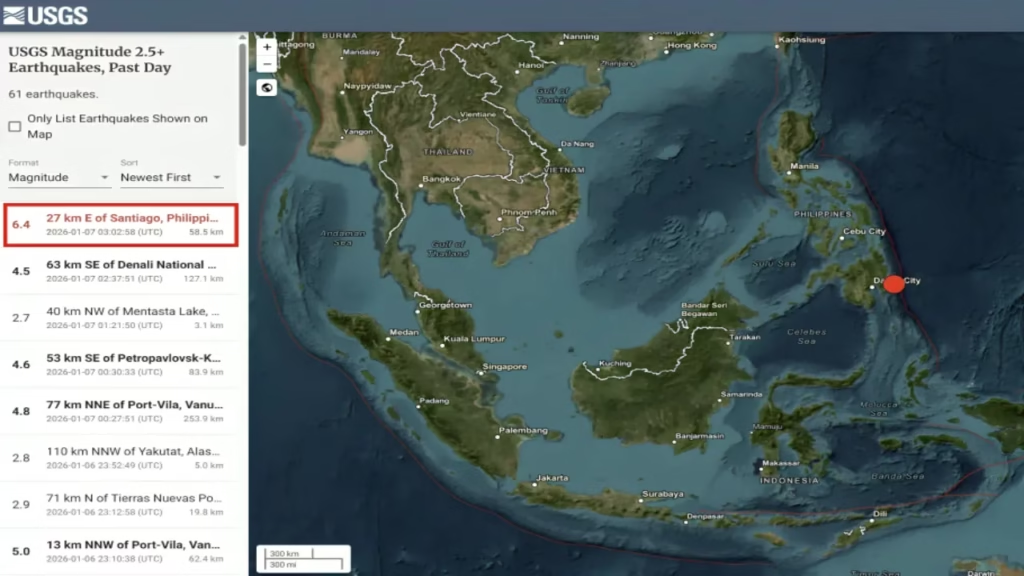
The Philippine Institute of Volcanology and Seismology (Phivolcs) confirmed that the earthquake struck at 11:02 a.m. local time. However, its epicentre was located around 47 kilometres from the coastal town of Manay in Davao Oriental. Below are other details about the Philippines earthquake today:
- According to the Phivolcs, the quake occurred at a depth of 42 kilometres.
- Tremors were felt across several parts of Mindanao, which caused residents to briefly evacuate buildings as a precaution.
- Local police and disaster officials near the epicentre stated there were no immediate reports of injuries or structural damage.
The U.S. Geological Survey (USGS) has also reported that the earthquake struck at a depth of 10 km, approximately 68 kilometres east of Baculin village in Surigao del Sur. The slight variation in measurements reflects differences in monitoring systems used by global and local agencies.
According to Reuters, Phivolcs director Teresito Bacolcol confirmed that the quake is unlikely to generate a destructive tsunami due to its depth. Therefore, it has added reassurance to coastal communities.
According to Phivolcs, the epicentre was located close to areas that experienced deadly earthquakes in October 2025, which resulted in seven deaths and widespread infrastructure damage.
Read more- UAE Citizenship for Companies
What Has Changed?
As of now, there are no new emergency rules or evacuation orders that have been issued. Still, authorities have taken the following precautionary steps after the Philippines earthquake:
- Aftershock warnings issued for areas near the epicentre
- Disaster response teams placed on alert in southern provinces
- Continuous seismic monitoring initiated by Phivolcs
- Public advisories were released urging residents to remain cautious
According to the reports from Xinhua news agency cited by Newsonminute.Phivolcs warned that damage could still happen if an aftershock happens, especially in areas close to the epicentre.
Read more – Dust, Fog, and Light Rain Expected
Who Is Affected?
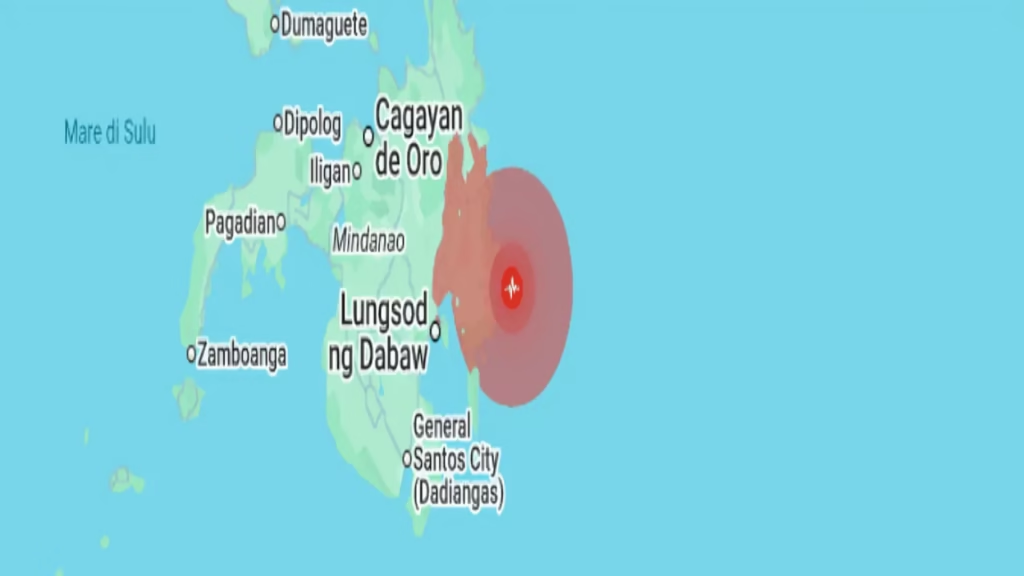
The earthquake primarily affected residents in the southern Philippines. Below are those areas:
- Coastal towns in Davao Oriental
- Parts of Surigao del Sur
- Nearby islands where tremors were clearly felt
The authorities advised all residents and visitors to stay alert, avoid damaged structures, and follow local advisories. Local police chief Joey Monato of Hinatuan told Reuters, “The quakes were not that strong, but people rushed outside”. Hence, it reflects the level of fear still connected to the seismic events in the region.
Read more – Denmark and Greenland Push Back as Trump Renews Calls to Annex Strategic Arctic Island
Why Earthquakes Are Common in the Philippines
The country is situated within the Pacific Ring of Fire, which is one of the most seismically active regions in the world. According to geological experts cited by international agencies, the country experiences frequent earthquakes due to complex tectonic interactions. Below are the top reasons behind frequent earthquakes in the region:
- The Philippine Sea Plate subducts beneath the Philippine Microplate along the Philippine Trench to the east.
- The Eurasian (Sunda) Plate moves beneath the islands along the Manila and Negros Trenches to the west.
This rare double subduction system creates immense underground pressure to make the Philippines highly prone to earthquakes.
Recent Earthquake History
The latest Philippines earthquake follows a series of strong seismic events in recent months. You can see the recent history below:
- December 22, 2025: A 5.7 magnitude quake struck waters near the Philippines, according to the GFZ German Research Centre for Geosciences.
- October 2025: A devastating 6.9 magnitude earthquake hit central Philippines near Cebu, causing casualties, power outages, and structural collapses.
- A tsunami warning was briefly issued in October but later withdrawn after no dangerous waves were detected.
These incidents highlight the ongoing seismic risk of the nation.
Official Source
Multiple authoritative agencies have issued statements regarding the Philippines earthquake. The following is the list of those agencies:
- Philippine Institute of Volcanology and Seismology (Phivolcs) – Primary national authority on earthquakes
- U.S. Geological Survey (USGS) – Provided global seismic measurements, as reported by Reuters
- Local police and disaster management offices – Confirmed no immediate casualties
In addition, the reports from Reuters, Newsonair, and Newsonminute have been used in this article to maintain accuracy, authority, and public safety awareness.
Note – The article will be updated soon when new information comes.
Read more – North Korea Launches Multiple Ballistic Missiles Ahead of South Korean President’s China Visit