Tuesday, 27 January 2026| Dubai, UAE [Posted at 4:33 pm ]
The UAE Pakistan airport deal, which proposed UAE-led operations of Islamabad International Airport, has been abandoned. Though officially labelled a commercial decision, its timing has sparked discussions around regional alliances, governance, and the UAE’s evolving strategic focus, especially towards India.
Related Reads – PIA Pakistan International Airlines Deal: Arif Habib Consortium Wins Historic Privatisation Bid
Islamabad Court Suicide Blast Kills 12, Injures 27
World’s Safest Airline Rankings 2026: UAE’s Etihad Airways Crowned Global Champion
What Was the UAE Pakistan Airport Deal?
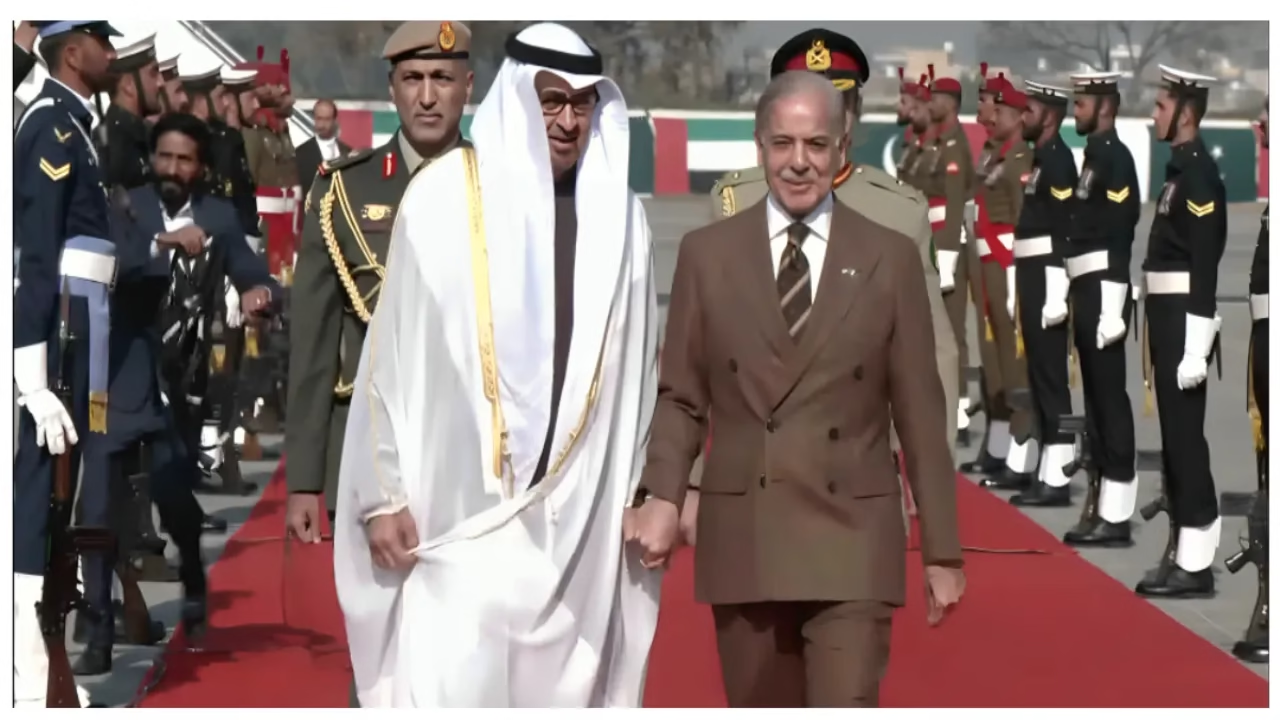
Overview: The deal aimed to outsource Islamabad Airport’s management to a UAE entity under a government-to-government framework.
Here’s the list of key details about the UAE Pakistan Airport deal:
- Discussions began in August 2025
- Focused only on Islamabad International Airport
- Required a local Pakistani operating partner
- Other airports like Karachi and Lahore were excluded
Despite months of talks, the proposal never moved into execution.
Why Did the UAE Step Back From the Deal?
Overview: Operational delays and a lack of clarity ultimately stalled the UAE Pakistan Airport deal.
Despite generally good relations between the UAE and Pakistan, the deal was cancelled. The primary reasons include:
- The UAE failed to nominate a local partner
- Repeated postponements created a deadlock
- Pakistan issued a final clarification request
- UAE responded without committing to an entity
Pakistani media confirmed that Abu Dhabi eventually lost interest in the project.
Pakistan’s Governance and Infrastructure Challenges
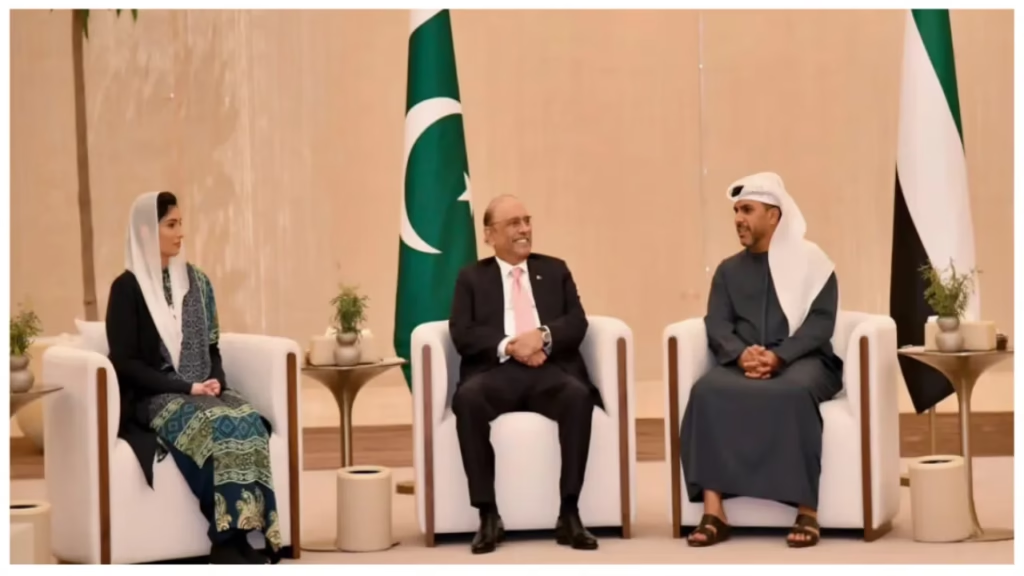
Overview: Structural weaknesses in Pakistan’s state-owned enterprises weakened investor confidence.
The UAE had many concerns about the deal. Below is a list of the key concerns:
- Political interference in operations
- Poor accountability and mounting losses
- Ageing airport infrastructure
- Safety and licensing controversies
Pakistan has already privatised Pakistan International Airlines (PIA), and Islamabad Airport is now on the privatisation list, highlighting broader systemic issues.
Did UAE–Saudi Tensions Play a Role?
Overview: While unofficial, the deal’s collapse coincides with shifting Gulf dynamics.
The UAE and Saudi Arabia are currently going through a bit of regional tension. Key details about the regional backdrop include:
- UAE and Saudi Arabia differ over Yemen
- Pakistan signed a defence agreement with Saudi Arabia
- Islamabad supports an “Islamic NATO” concept
- The UAE has instead expanded defence cooperation with India
These parallel developments add geopolitical context to the UAE Pakistan airport deal setback.
Read more – Saudi UAE Yemen War Escalates as Riyadh Strikes UAE-Backed Forces
Padma Awards 2026: Mammootty, Dharmendra Honoured as India Celebrates Excellence Across Fields
India–UAE Relations: A Clear Contrast
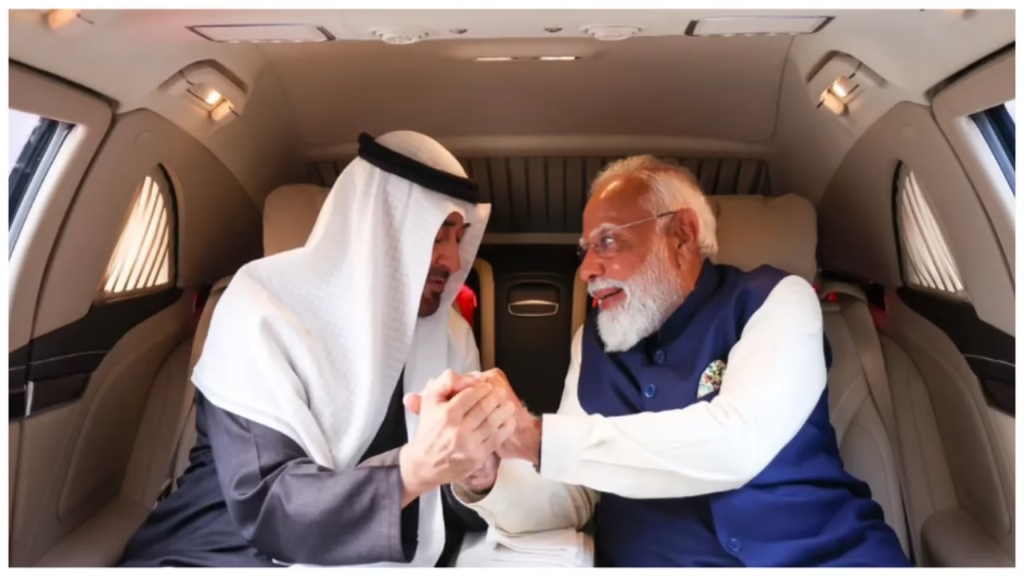
Overview: As the Pakistan deal stalled, India–UAE ties accelerated significantly.
Recently, Indian Prime Minister Narendra Modi and UAE President Sheikh Mohamed bin Zayed Al Nahyan welcomed the signing of a Letter of Intent towards the conclusion of a Strategic Defence Partnership during the latter’s visit to New Delhi.
Key highlights of the visit:
- UAE President’s high-profile visit to New Delhi
- Approval of 900 Indian prisoners for release
- Letter of Intent for Strategic Defence Partnership
- Expansion of the Comprehensive Strategic Partnership
The joint statement issued after the visit outlined long-term geopolitical and economic alignment.
What This Means for the UAE
Overview: The decision reflects the UAE’s preference for stability and long-term strategic trust.
The UAE residents need not worry about the deal cancellation. However, this decision highlights:
- Focus on transparent governance environments
- Aviation investments tied to operational certainty
- Strategic partnerships over transactional deals
- Increasing alignment with reliable regional partners
The UAE Pakistan airport deal episode reinforces Abu Dhabi’s disciplined investment approach.
What’s Next for Pakistan’s Airports?
Overview: Pakistan is shifting from outsourcing to outright privatisation.
Current direction:
- Islamabad Airport listed for privatisation
- Karachi and Lahore are under future consideration
- No exclusive UAE government-to-government framework
- Private and global bidders are expected
This marks a reset in Pakistan’s aviation strategy.
FAQs: UAE Pakistan Airport Deal
1. Why was the UAE Pakistan airport deal cancelled?
Due to delays, lack of a local partner, and declining operational confidence.
2. Was politics involved?
Not officially, but regional alliances form an important backdrop.
3. Which airport was affected?
Islamabad International Airport.
4. Is the UAE reducing engagement in South Asia?
No. The UAE is expanding ties, particularly with India.
5. What will Pakistan do next?
It will proceed with the full privatisation of Islamabad Airport.
Conclusion: Beyond an Aviation Agreement
The collapse of the UAE Pakistan airport deal goes beyond airport management. It reflects shifting trust, governance concerns, and evolving geopolitical alignments. For the UAE, the message is clear: sustainable partnerships require stability, clarity, and long-term confidence.
Read more – How to Move Your Family to the UAE Without Chaos