

The recent announcement of a US-India trade deal marks a historic shift in the diplomatic and economic relationship between Washington and New Delhi. By addressing long-standing tariff disputes and oil procurement strategies, both nations are attempting to reshape the global economic landscape for the coming decade.
RELATED READS: Trump Fumes After Trevor Noah’s Epstein Island Joke: A New Legal Battle Begins Following the 2026 Grammys
The Board of Peace: Trump’s Multi-Billion Dollar Plan for a Post-War Gaza
Trump vs. Mauritius: Why the Chagos Islands Dispute Matters for Global Security and the UAE
US-India Trade Deal: Will India Drop Russia for America?
core components of the agreement reached between President Trump and Prime Minister Modi, focusing on tariff reductions and energy shifts.
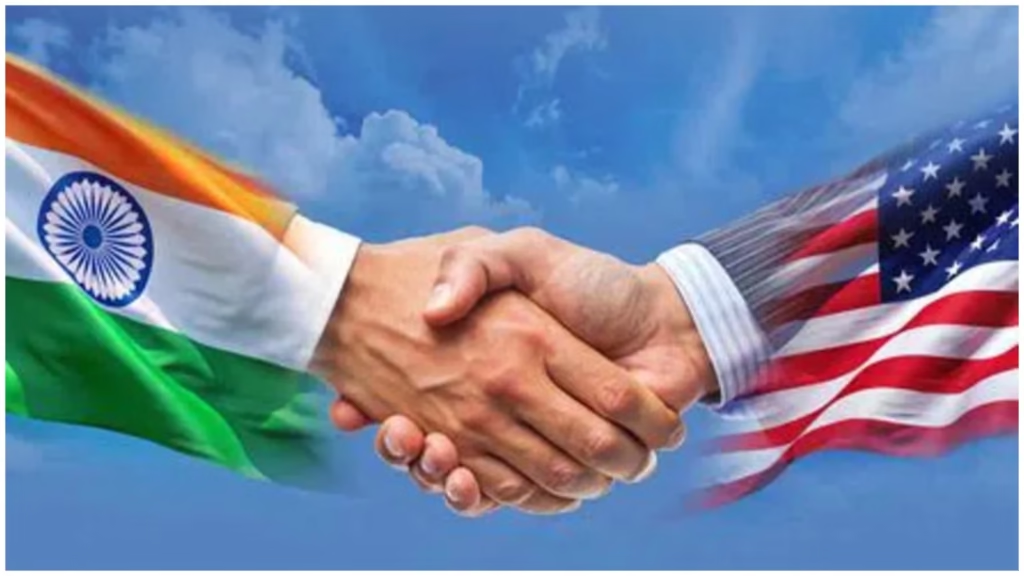
Following a decisive phone call between the two leaders, the US-India trade deal was made public, promising a reduction in American tariffs on Indian goods from 25% to 18%. In exchange, India has reportedly agreed to move away from its dependence on Russian energy. This agreement is seen as a strategic victory for the Donald Trump trade policy, which seeks to boost American exports while curbing the influence of its geopolitical rivals.
The Russian Oil Dilemma: Strategic Pivot or Policy Pressure?
the controversial claim that India will stop purchasing energy from Russia to satisfy American trade conditions.
A central pillar of this US-India trade deal is the reported commitment from India to stop Russian oil imports. President Trump stated that Narendra Modi agreed to shift India’s massive energy requirements toward American and potentially Venezuelan sources. This move would remove the 25% tariff penalty previously imposed on India for its refusal to abandon Russian energy, but it remains a complex decision for New Delhi’s long-term energy security.
Impact on the Global Energy Market
The decision to limit Russian oil imports will have immediate effects on the global energy market. As one of the world’s largest consumers, India’s pivot toward the West could lead to a spike in international crude prices as demand for non-Russian oil surges. Furthermore, this shift reinforces the dominance of the United States in the global energy market, giving Washington significant leverage over international pricing and supply.
Trump’s Strategy: America First and Economic Pressure
motivations behind the Donald Trump trade policy and how it uses market access as a tool for diplomacy.
The current Donald Trump trade policy is designed to reduce the US trade deficit while isolating Russia economically. By negotiating this US-India trade deal, Trump aims to secure a $500 billion commitment from India to buy American technology, agriculture, and energy products. This strategy ensures that while tariffs are lowered, the flow of capital heavily favors the American economy in the long run.
Challenges for Narendra Modi and the Indian Economy
internal difficulties India faces in balancing its friendship with Russia while seeking better ties with the US.
For Narendra Modi, the deal is a balancing act between maintaining a decades-old partnership with Russia and securing favorable trade terms with the United States. While the reduction in tariffs is a victory for Indian exporters, the loss of discounted Russian fuel could lead to higher domestic petrol prices. Narendra Modi must now ensure that the shift to the global energy market does not lead to inflation that hurts the common citizen.
The China Factor and Regional Power Shifts
how China might react to the strengthening bond between its two biggest rivals, the US and India.

China views the strengthening US-India trade deal with caution, as it signals a more unified front between its largest economic competitors. If India successfully replaces Russian oil imports with Western energy, it reduces Russia’s financial stability, potentially forcing Moscow into a closer, more dependent alliance with Beijing. This creates a new “Cold War” dynamic where the US and India align more closely to counter Chinese influence in Asia.
Analysis of Benefits and Risks
This list provides a quick overview of what both nations stand to gain or lose from this massive economic agreement.
- Tariff Relief: Indian exporters gain better access to the US market with a lower 18% tariff rate.
- Energy Diversification: India reduces its reliance on a war-torn Russia, though at a higher cost from the global energy market.
- Geopolitical Clout: The US successfully pulls a major global player away from the Russian sphere of influence.
- Economic Cost: US small businesses warn that the 18% rate is still six times higher than historical averages.
- Defense Concerns: A complete break from Russia could jeopardize India’s supply of spare parts for its military hardware.
Frequently Asked Questions (FAQs)
1. Is the US-India trade deal officially signed? The deal has been announced by President Trump following a call with PM Modi, with key details confirmed by White House officials, though formal documentation is ongoing.
2. Will petrol prices in India increase? Possibly. Since Russian oil was sold at a discount, switching to the standard global energy market rates from the US might increase costs for Indian refineries.
3. Why is Trump lowering tariffs to 18% instead of lower? Under the Donald Trump trade policy, the 18% rate is considered a compromise from the previous 50% “penalty” rates, though it remains higher than pre-2024 levels.
4. What does the $500 billion commitment cover? India has committed to buying American goods including energy (oil/coal), advanced technology, and agricultural products.
5. How does the EU-India deal relate to this? India recently signed a deal with the EU to diversify its partnerships, but the US deal is seen as a direct response to maintain American dominance in Indian trade.
Conclusion
The US-India trade deal represents a significant turning point in modern geopolitics, favoring a closer alignment between the world’s two largest democracies. While the move away from Russia poses economic challenges for India, the potential for long-term technological and energy cooperation with the US offers immense opportunities. Only time will tell if this strategic shift successfully stabilizes the region or creates new tensions in the global order.
ALSO READ: UAE Pakistan Airport Deal Scrapped: What It Reveals About Regional Power Shifts






4 thoughts on “Trump’s Trap or Modi’s Masterstroke? Decoding the Terrifying Trade-off Involving Russia and China”