26 February 2026| Dubai, UAE [ Posted at 2:54 pm]
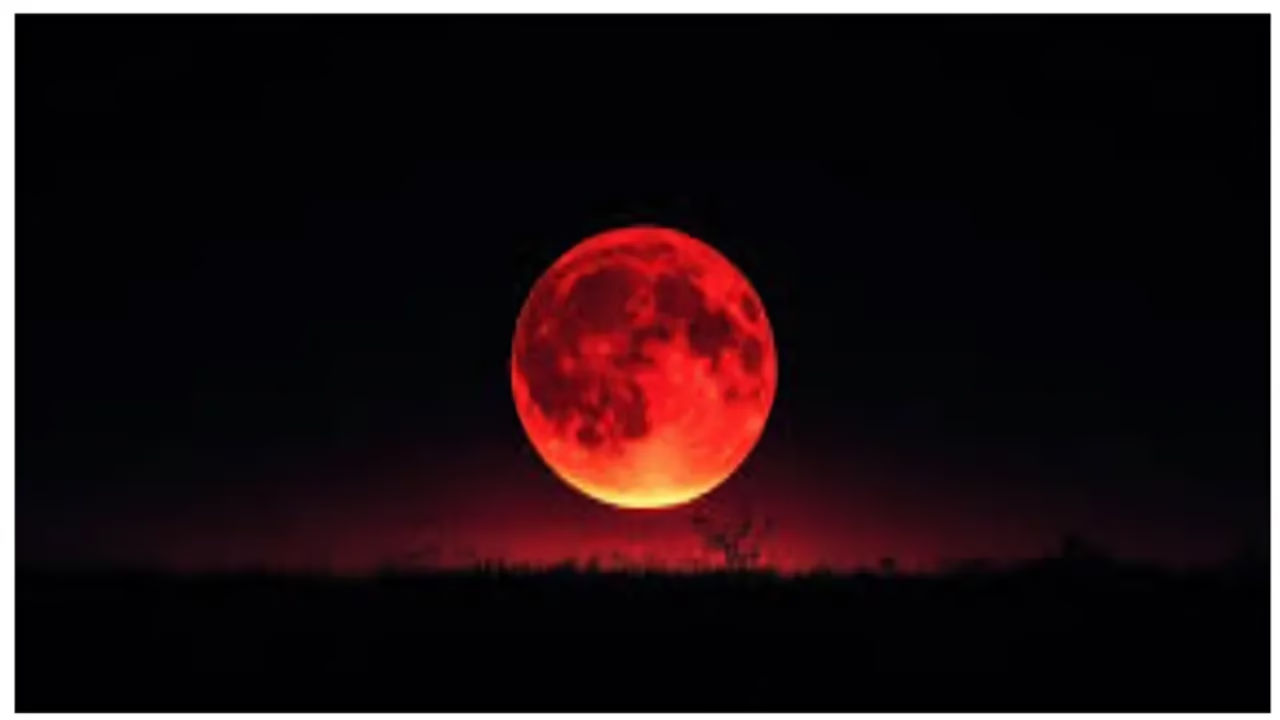
A rare blood moon total lunar eclipse is set to light up the skies on March 2–3, 2026. It’s the last total lunar eclipse we’ll witness for nearly three years. Skywatchers across North America, the Pacific, East Asia, Australia and New Zealand are in for a dramatic celestial show.
Related Reads: UAE to Witness Rare Blood Moon: First Total Lunar Eclipse in Seven Years
Rare Celestial Spectacle: Corn Moon and Blood Moon Eclipse to Dazzle UAE Skies on September 7
UAE to Witness Rare Blood Moon on September 7: Longest Total Lunar Eclipse in Years
What Is a Blood Moon Total Lunar Eclipse?
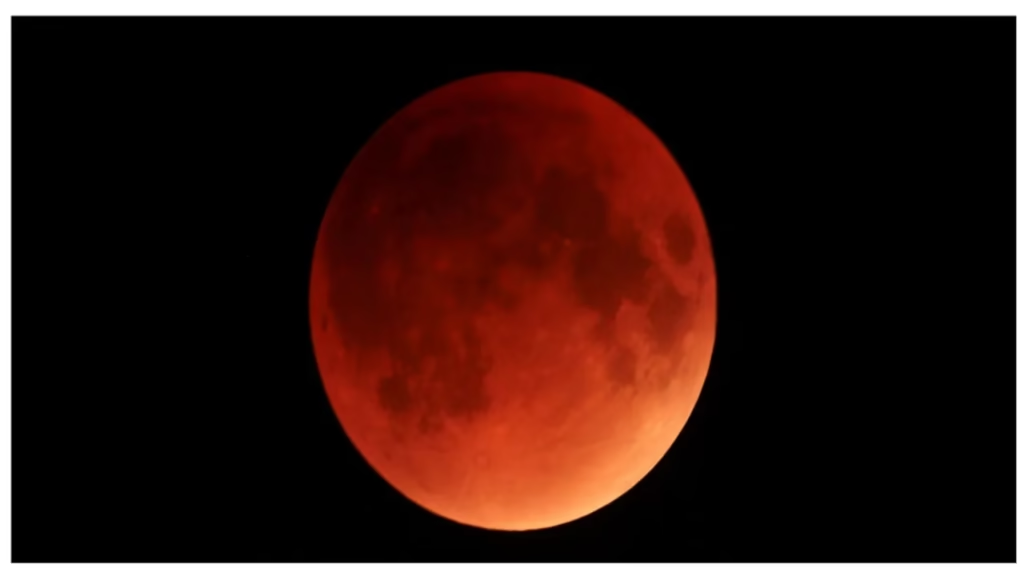
Overview: It happens when Earth moves directly between the Sun and the Moon, casting a shadow on the lunar surface.
A blood moon total lunar eclipse occurs during a Full Moon when:
- The Sun, Earth and Moon align perfectly
- Earth’s shadow fully covers the Moon
- Sunlight filters through Earth’s atmosphere
- The Moon turns a deep coppery-red colour
This red glow is caused by Rayleigh scattering. It is the same process that makes sunsets red. Earth’s atmosphere filters out blue light and bends red light toward the Moon.
Unlike solar eclipses, a blood moon eclipse is completely safe to watch with the naked eye.
March 2–3, 2026: Key Timings & Phases
Overview: The eclipse unfolds in stages over several hours, with totality lasting about 59 minutes.
1. Penumbral Phase
This is when the Moon first touches Earth’s outer shadow.
- Begins: 8:43 UTC (2:43 a.m. CST)
- Subtle dimming begins
- Hard to notice without careful observation
2. Partial Eclipse
Now Earth’s darker inner shadow becomes visible.
- Begins: 9:49 UTC (3:49 a.m. CST)
- A dark curve appears on the Moon
- The surface slowly shifts toward reddish tones
3. Totality – The Blood Moon Moment
This is the highlight of the total lunar eclipse, also known as a blood moon.
- Begins: 11:03 UTC (5:03 a.m. CST)
- Maximum eclipse: 11:33 UTC
- Ends: 12:02 UTC (6:02 a.m. CST)
- Duration: Approximately 59 minutes
At maximum eclipse, the Moon will glow deep red while positioned in the direction of the constellation Leo.
4. Waning Phases
The Moon slowly exits Earth’s shadow.
- Partial eclipse ends: 13:17 UTC
- Penumbral eclipse ends: 14:23 UTC
Where Will the Blood Moon Be Visible?
Overview: Visibility depends on your location.
Here’s what to expect globally:
- North America: Best viewed before dawn on March 3
- Hawaii: Evening of March 2
- Japan, New Zealand & Australia: Entire eclipse visible
- Central Asia: Moon rises already eclipsed
- Eastern Europe & Africa: Not visible
Across Australia, cities like Sydney, Melbourne, Brisbane and Perth will see totality during evening hours.
The blood moon total lunar eclipse will appear high in the sky for East Asia. However, the western parts of North America will experience the full sequence before sunrise.
The eclipse will not be visible in the United Arab Emirates (UAE).
Read more: Dubai Aerospace Enterprise Doubles Profit to $653 Million in 2025 After NAC Integration
UAE Astronaut Mohammad Al Mulla Completes ESA’s Prestigious CAVES Training
Why Is This Eclipse Special?
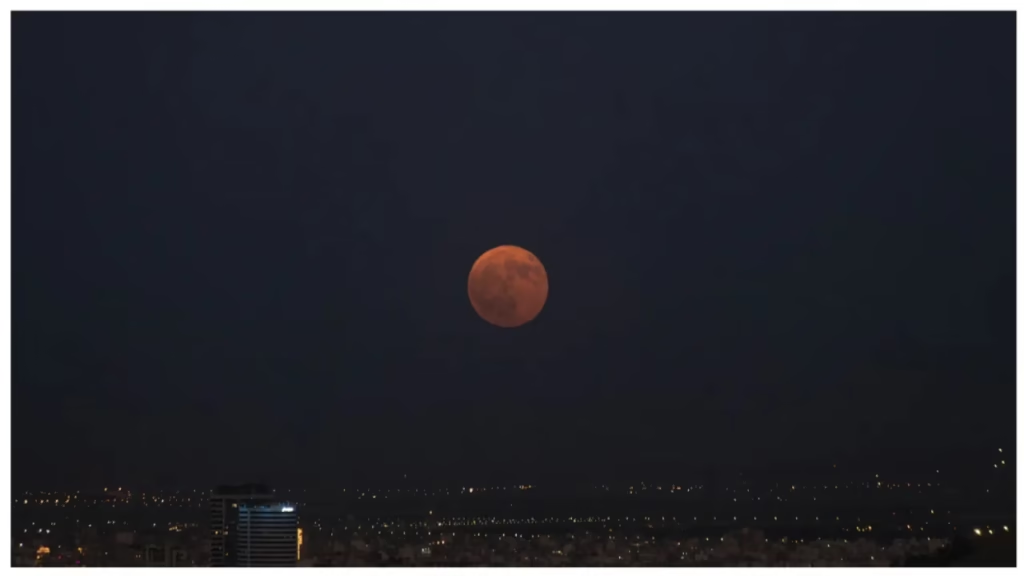
Overview: What makes this eclipse special?
This isn’t just another lunar event. Here’s the list of key special features:
- It’s the last total lunar eclipse until December 31, 2028
- It belongs to Saros 133, a long-running eclipse cycle
- The Moon reaches peak eclipse just 6.5 days after perigee
- A bright star, Regulus, will shine nearby
After this blood moon total lunar eclipse, the next total event will occur on New Year’s Eve 2028; already dubbed the “New Year’s Eve Blood Moon.”
The March Worm Moon Connection
Overview: This eclipse coincides with March’s Full Moon.
The March Full Moon is traditionally called the Worm Moon, marking the stirring of earthworms and early spring thaw in the Northern Hemisphere.
Other traditional names include:
- Crow Moon
- Sap Moon
During this blood moon total lunar eclipse, the Worm Moon will take on its dramatic crimson appearance.
Astrological Angle: Blood Moon in Virgo
Overview: From an astrology perspective, eclipses symbolize transformation.
The 2026 eclipse falls in Virgo (as interpreted in astrological traditions), bringing themes of:
- Reset and reorganization
- Emotional clarity
- Letting go of perfectionism
- Major transitional energy
Fixed signs, like Taurus, Leo, Scorpio and Aquarius, may feel the intensity more strongly. Many astrologers describe this eclipse as a “get your life together” moment rather than a gentle reset.
How to Watch & Photograph It
Overview: Key tips to watch the blood moon eclipse.
You don’t need special equipment, but it enhances the experience.
- Naked eye viewing is perfectly safe
- Binoculars sharpen detail
- Telescopes reveal lunar surface textures
- A tripod and long exposure settings help photographers
Find a dark location away from city lights for the best view of the blood moon total lunar eclipse.
As we mentioned above, the eclipse will not be visible in the UAE due to timing issues, but residents can watch it through live streaming on the UAE Space Agency or NASA.
FAQs
1. Is a blood moon total lunar eclipse dangerous to watch?
2. Why does the Moon turn red?
3. How long will totality last?
4. When is the next total lunar eclipse?
5. Can I see blood moon total lunar eclipse from Europe?
Final Thoughts
The March 2–3, 2026, blood moon total lunar eclipse is a rare cosmic alignment that won’t repeat for nearly three years. Whether you’re observing for science, photography, or personal reflection, this is one night you’ll want to mark on your calendar.
Read more: Katy Perry & Justin Trudeau: Xavier Trudeau Breaks Silence on Dad’s Romance and Shares Music Secrets