Published: Sunday, 9 August 2026, 3:02 pm| Dubai | Edited: Sunday, 9 August 2026, at 3:12 pm
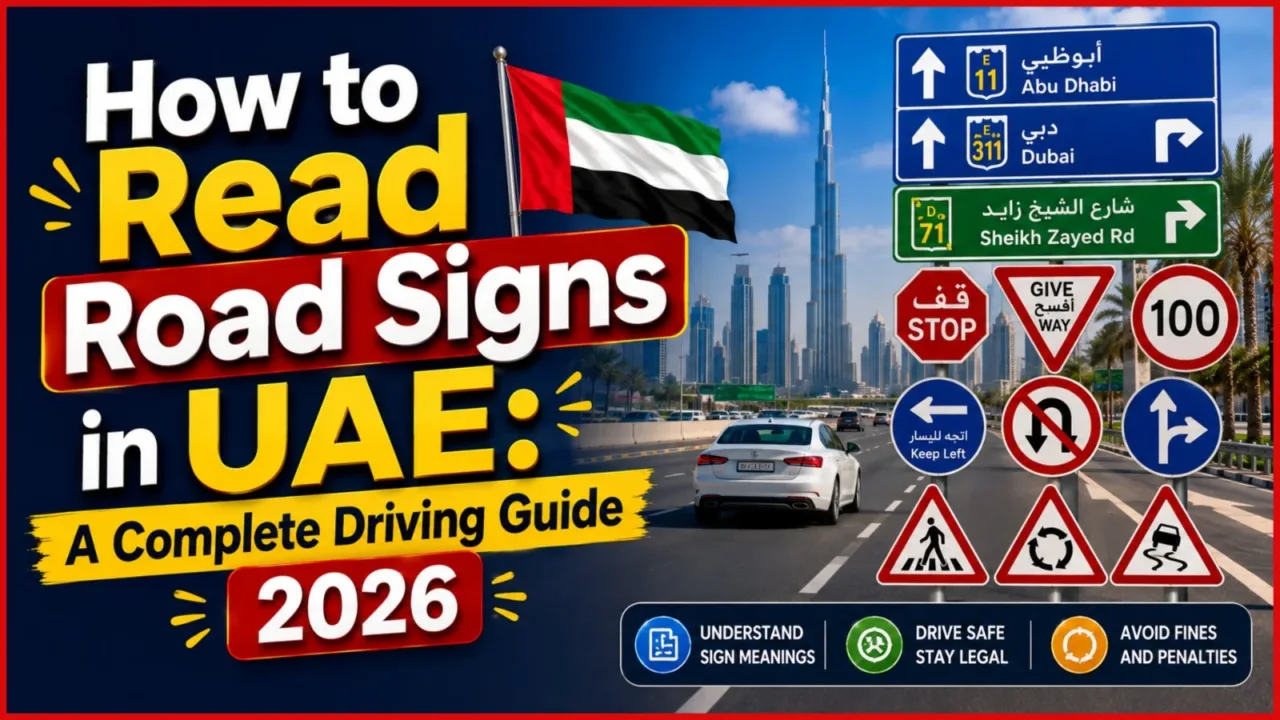
Learning How to Read Road Signs in UAE is crucial for safe, stress free driving across all emirates. Read on to discover complete details about sign categories, color codes, shapes, route numbers, and traffic regulations in depth.
ALSO READ:
- How UAE Drivers Can Stay Safe in Dust Storms: 5 Rules You Shouldn’t Ignore
- How to Get Discounts on Traffic Fines in the UAE?: Dubai, Abu Dhabi, and Northern Emirates Rules
- Full Guide About The Abu Dhabi Mawaqif Parking Fines
Master Traffic Rules and Navigation Across All Emirates
Discover the fundamental purpose, governing authorities, and bilingual standards of UAE traffic signage.
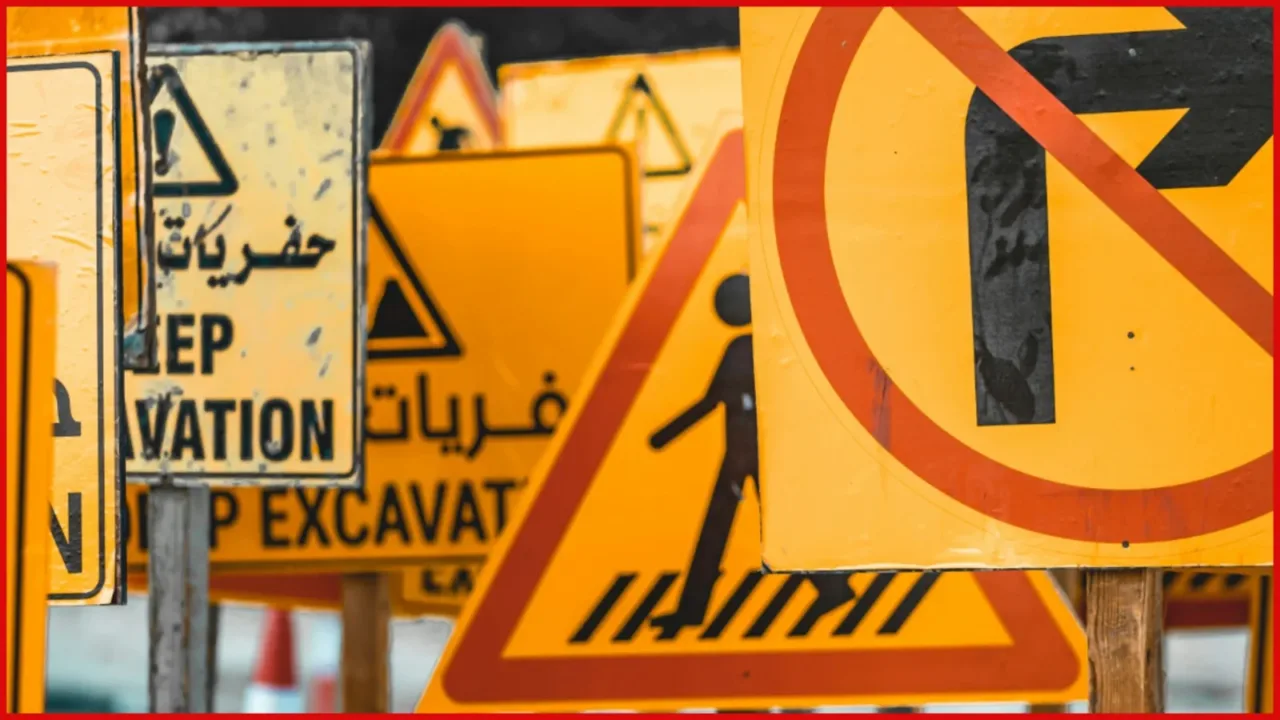
Road signs across the United Arab Emirates are systematically designed to manage traffic flow, protect pedestrians, and prevent accidents. They serve three core purposes. regulating legal duties, warning drivers of upcoming hazards, and guiding motorists toward their destinations smoothly.
Traffic signs are governed by strict regulatory bodies to ensure consistency across the country. In Dubai, the Roads and Transport Authority (RTA) oversees signage, while the Department of Transport (DoT) manages Abu Dhabi. The Emirates Authority for Standardisation and Metrology (ESMA) maintains nationwide standards. Every official sign features bilingual text in Arabic and English alongside universally recognized symbols.
- Primary Functions: Regulation of legal duties, hazard warnings, and navigation guidance.
- Key Governing Authorities: RTA in Dubai, DoT in Abu Dhabi, and ESMA nationwide.
- Bilingual Design: Features Arabic and English text for clear international understanding.
- Universal Symbols: Utilizes standardized visual graphics for immediate driver recognition.
Categories of Road Signs in the UAE
Explore the distinct functional categories of traffic boards that dictate driving rules.
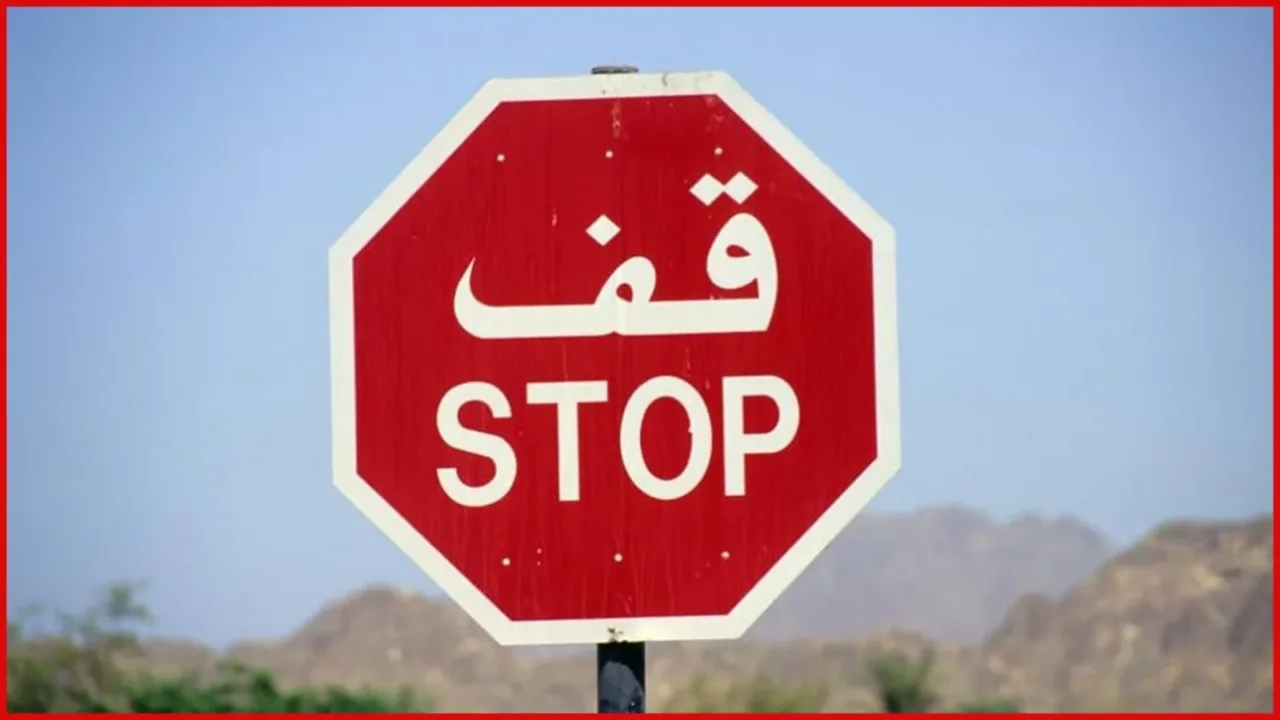
Understanding the main categories of traffic signs helps drivers react promptly and correctly on high speed highways or busy urban streets. A complete Dubai RTA road signs guide divides traffic boards into regulatory, warning, and guide signs.
Regulatory signs state legal requirements and are subdivided into control signs (like STOP or GIVE WAY), mandatory action signs (such as KEEP LEFT or minimum speeds), prohibitory signs (no U turn or speed limits), parking control signs, and freeway controls. Warning signs feature red borders to alert drivers to hazards like sharp curves or pedestrian crossings. Guide signs provide navigation, exit directions, and tourist information.
- Control Signs: Direct right of way using STOP, GIVE WAY, and NO ENTRY boards.
- Mandatory Action Signs: Instruct mandatory driving moves such as KEEP LEFT or direction arrows.
- Prohibitory Signs: Display forbidden actions including speed limits, no U-turns, or restricted entry.
- Warning Signs: Alert motorists to road hazards, roadworks, pedestrian areas, and steep slopes.
- Guide & Information Signs: Show exit points, routes, hospital locations, and cultural sites.
Understanding Colors and Shapes
Learn how specific colors and geometric shapes communicate immediate driving instructions.
Color coding and geometric patterns allow drivers to recognize messages instantly without reading detailed text. Recognizing UAE road sign colors and shapes ensures fast decision making on busy multi lane highways.
Blue backgrounds mark inter emirate routes and general service facilities, whereas green boards indicate city routes within specific emirates. White panels display residential street names, and brown signs mark tourist attractions or heritage landmarks. Shapes follow international conventions. octagons demand a full stop, inverted triangles require yielding, circles specify mandatory rules or prohibitions, and triangles warn of upcoming dangers.
- Blue Backgrounds: Represent inter emirate national highways (E-routes) and essential services.
- Green Backgrounds: Mark intra city highways and local routes (such as Dubai D-routes).
- White Panels: Used for inner city street names and residential road directions.
- Brown Signs: Highlight cultural landmarks, heritage zones, and tourist destinations.
- Geometric Shapes: Octagon (STOP), inverted triangle (Yield), circle (Rules), triangle (Warnings).
ALSO READ:
- Dubai’s ‘Quiet Roads’ Crackdown: A Complete Guide to New Traffic Fines and Safety Rules
- How to renew Dubai Driving License in 2026: RTA App, Eye Test, Fees, Kiosk & Fine Clearance Guide
Route Numbering Systems (E-Routes vs D-Routes)
Understand how highways and inner city roads are numbered for seamless navigation.
The United Arab Emirates utilizes a clear alphanumeric route numbering system to help motorists travel smoothly across cities and emirates. This system prevents drivers from missing key exits on major expressways.
E-Routes (Emirate Routes) are primary highways connecting different emirates, represented by blue signs featuring the letter ‘E’ followed by numbers (such as E11). D-Routes are local routes within Dubai, displayed on green signs with the letter ‘D’ (such as D94). Other emirates apply similar regional numbering frameworks to guide motorists efficiently through local commercial and residential sectors.
- E-Routes (Blue Signs): Connect major emirates together for long distance travel.
- D-Routes (Green Signs): Guide internal city traffic and neighborhood connectivity in Dubai.
- Regional Systems: Other emirates use local route numbering following similar visual conventions.
- Key Benefit: Helps drivers plan highway exits and lane changes well in advance.
Language, Typography, and Design Standards
Discover the font styles and visual standards used to ensure high legibility at high speeds.
To accommodate millions of residents from diverse backgrounds, traffic signs in the UAE prioritize maximum clarity and high visibility under all lighting conditions.
Every official sign displays clear English alongside Arabic text written in the legibly structured ‘Boutros Advertisers Naskh’ typography. Font sizes, background reflective materials, and symbol proportions are strictly standardized so drivers can interpret directions effortlessly while traveling at high speeds on expressways.
- Bilingual Display: Combines Arabic text on top with clear English text below.
- Standard Font: Uses Naskh style typography for optimal legibility at high speed.
- High Contrast: High reflectivity panels ensure nighttime and bad weather visibility.
- Uniformity: Identical iconography across all seven emirates prevents driver confusion.
Road Markings vs Road Signs
Examine how painted pavement lines work together with overhead boards to direct traffic.
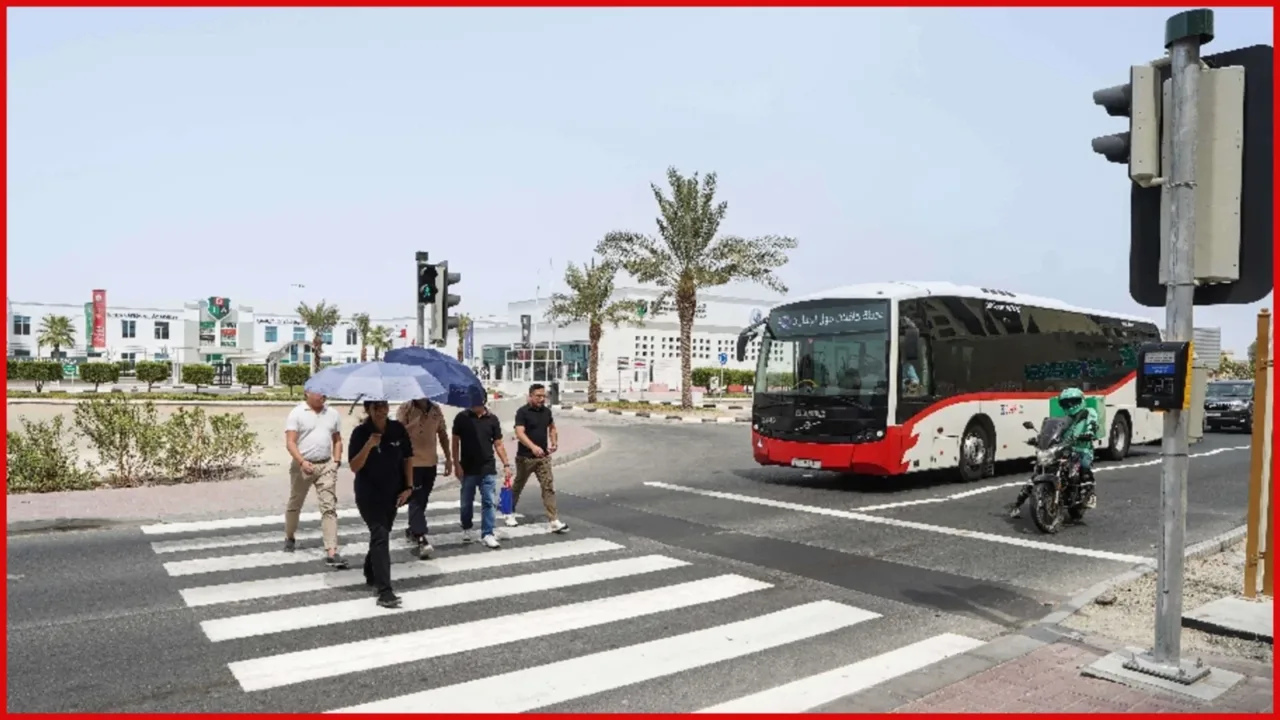
Pavement markings painted on asphalt work directly alongside overhead traffic signs to clarify lane discipline and right of way rules. Understanding UAE traffic fines and road markings helps drivers avoid severe financial penalties.
Solid white lines prohibit lane changing and mark stop positions at intersections, while broken white lines permit safe lane changes. Yellow box junctions at intersections strictly prohibit stopping inside the grid to avoid blocking cross traffic. Zebra crossings demand that drivers yield entirely to pedestrians before driving forward.
- Solid White Lines: Prohibit lane crossing and mark official intersection stopping lines.
- Broken White Lines: Indicate lanes where overtaking or changing lanes is permitted.
- Yellow Box Junctions: Grid lines where stopping is illegal if the exit path is blocked.
- Pedestrian Zebra Crossings: Require motorists to come to a halt when pedestrians cross.
Legal Importance, Penalties, and Driving Tips
Review traffic law enforcement, penalty points, and practical driving suggestions for residents.
All regulatory traffic signs in the United Arab Emirates are legally binding enforcement tools rather than mere recommendations. Ignoring regulatory boards like STOP signs, speed limits, or reserved parking leads to severe traffic fines, black points on driving licenses, or vehicle impoundment.
To drive safely, scan boards by checking color first, shape second, and text last. Learn essential Arabic terms like ‘Stop / قف’ or ‘No Entry / ممنوع الدخول.’ Always obey temporary roadwork signs or manual police directions, as they override permanent signs under UAE traffic law.
- Legal Enforcement: Regulatory signs carry legal authority with strict traffic fine penalties.
- Special Zones: Unauthorized parking in person with a disability or emergency zones yields heavy fines.
- Scan Method: Identify color first, shape second, and text content third.
- Temporary Signs: Construction signs and live police instructions override regular signs.
Conclusion
Mastering UAE road signs ensures safe driving, smooth navigation, and complete protection against costly traffic penalties across all emirates.
ALSO READ:
- How to Pass RTA Driving Test First Time?: Proven Tips, Yard Tricks, and Mistakes to Avoid (2026 Guide)
- The Ultimate Guide to UAE Driving License Conversion (2026 Edition)
FAQs
What is the main difference between blue and green road signs in the UAE?
Blue signs mark major inter emirate expressways (E-routes), while green signs mark local city routes (D-routes).
Are all road signs in the UAE written in both Arabic and English?
Yes, all official traffic signs in the UAE are bilingual to accommodate residents and tourists.
What does a yellow box junction painted on the road mean?
It indicates an intersection grid where vehicles must not enter unless their exit path is completely clear.
What happens if a driver ignores a regulatory STOP sign in the UAE?
Failing to stop at a regulatory STOP sign results in legal penalties, financial fines, and license black points.