You’ve just seen the two lines on the test. After the excitement, the practical questions start. How much time off will I get? Will I be paid? Can my employer let me go? And how much time does my partner get?
If you work in the UAE private sector, the answers are clear, and the law is on your side. Here’s a simple guide to maternity and paternity leave in 2026.
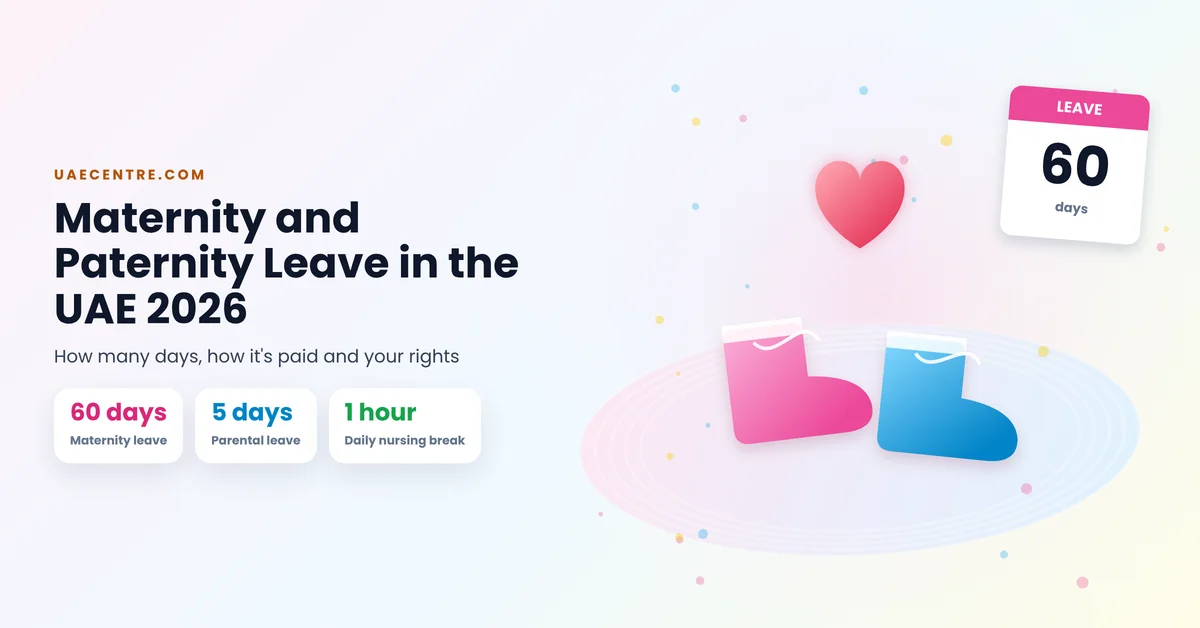
Quick answer: Women in the UAE private sector get 60 days of maternity leave: 45 days on full pay and 15 days on half pay, with no minimum service required. After returning, mothers get paid nursing breaks of up to one hour a day for six months. Both parents also get 5 working days of paid parental leave, to use within six months of the birth. Employers cannot dismiss a woman because she is pregnant or on maternity leave.
Maternity Leave at a Glance
| Entitlement | Private sector rule |
| Maternity leave | 60 calendar days |
| Pay | 45 days full pay, then 15 days half pay |
| Minimum service needed | None, from day one of employment |
| Extra leave (mother or baby unwell from pregnancy or birth) | Up to 45 more days, unpaid |
| Baby born sick or with a disability | 30 more days on full pay, then up to 30 days unpaid |
| Nursing breaks | Up to 1 hour a day, paid, for 6 months |
| Parental leave (either parent) | 5 working days, paid, within 6 months of birth |
These rules come from Federal Decree-Law No. 33 of 2021 on labour relations. They apply to private sector employers on the mainland and in most free zones.
How Maternity Leave Is Paid
For the first 45 days, you receive your full wage. For the next 15 days, you receive half. The law doesn’t require any minimum period of service, so even new employees qualify.
Your other benefits keep running while you’re on leave. Your service continues to count towards your end-of-service gratuity and annual leave.
Check your contract: many UAE employers offer more than the legal minimum, such as 90 days or more on full pay. The law sets the floor, not the ceiling.
When Can Maternity Leave Start?
Maternity leave is usually taken around the birth. Many women start it a little before their due date, often up to around 30 days before. Talk to your employer early about your preferred start date and give them a medical certificate with your expected due date.
Many mothers also add their annual leave to the end of maternity leave, with their employer’s agreement. It’s a common way to get more time at home with the baby.
Extra Leave if Mother or Baby Is Unwell
- Illness linked to pregnancy or birth: if the mother is ill because of the pregnancy or delivery, she can take up to 45 more days of unpaid leave, with a medical certificate.
- Baby born sick or with a disability: if the child needs constant care, the mother can take 30 more days on full pay, and then up to 30 days unpaid, again with medical proof.
Some of this extra leave may be combined with sick leave, depending on the situation. Ask HR to explain your options in writing.
Nursing Breaks After You Return
When you go back to work, you’re entitled to nursing breaks for six months after the birth. These can be one or two breaks a day, adding up to one hour, and they count as paid working time.
Agree the timing with your manager. Some mothers take the hour at the start or end of the day to shorten their working hours.
Paternity and Parental Leave
Since 2020, private sector employees in the UAE can take 5 working days of paid parental leave. It’s available to both fathers and mothers, and must be taken within six months of the birth.
Fathers can take it all at once or spread it out, depending on the employer’s policy. Mothers can take it in addition to their 60 days of maternity leave.
Can You Be Fired for Being Pregnant?
No. Under UAE labour law, an employer cannot dismiss a woman because she is pregnant, on maternity leave or has given birth. Pregnancy-related discrimination is not allowed.
If you’re treated unfairly, keep records of emails and messages, and raise it with HR in writing. If that doesn’t work, you can file a MOHRE complaint for free.
Government Sector and Free Zones
Government employees often get more maternity leave than the private sector, and the rules differ by emirate and employer. For example, many federal and local government mothers receive around 90 days of paid maternity leave, and some emirates allow extra unpaid leave on top.
DIFC and ADGM in Dubai and Abu Dhabi have their own employment laws, with their own maternity rules. If you work there, check your free zone’s regulations and your contract.
Is Maternity Leave Getting Longer?
There have been calls to extend private sector maternity leave. The Federal National Council has recommended longer paid leave, and officials have said proposals are being studied. But for now, the law is still 60 days. We’ll update this article if that changes.
Your Pregnancy Checklist
- Check your contract and HR policy for any extra maternity benefits.
- Review your cover. Check your health insurance for maternity benefits, waiting periods and approved hospitals early.
- Tell your employer in writing and share your expected due date.
- Plan your leave dates, including any annual leave you’d like to add.
- Plan the paperwork for your baby. After the birth, you’ll need a birth certificate, passport, residence visa and Emirates ID for your newborn. Apply for the baby’s residence visa on time to avoid fines.
- Check your sponsorship. If you’re sponsoring your family, make sure you meet the minimum salary rules.
Frequently Asked Questions:
Final Word: Know Your Rights, Then Enjoy the Moment
Having a baby is life-changing, and money or job worries shouldn’t spoil it. Know your 60 days, your nursing breaks and your partner’s parental leave, check whether your employer offers more, and plan the paperwork early. Then focus on what matters most: your new family.
Official sources: Ministry of Human Resources and Emiratisation (MOHRE) and the UAE Government portal.
This guide is for general information and is not legal advice. Rules may change and can differ for government, DIFC and ADGM employees, so check with your HR team or MOHRE. Last updated: 13 November 2026.