The SMS arrives on an ordinary afternoon: your residence permit has been cancelled. Maybe you saw it coming because you resigned or your contract ended. Maybe you didn’t. Either way, the same question hits you straight away: how long do I actually have before I need to leave?
The honest answer is that it depends on your visa type, and a lot of what you’ll read online is out of date. Some websites still say 30 days for everyone. Others say 6 months. Your colleague’s cousin probably has a third answer.
This guide sets it out clearly, based on the current rules published by the Federal Authority for Identity, Citizenship, Customs and Port Security (ICP). You’ll learn your grace period, when the clock starts, how to check your exact deadline, and what you can do before time runs out.
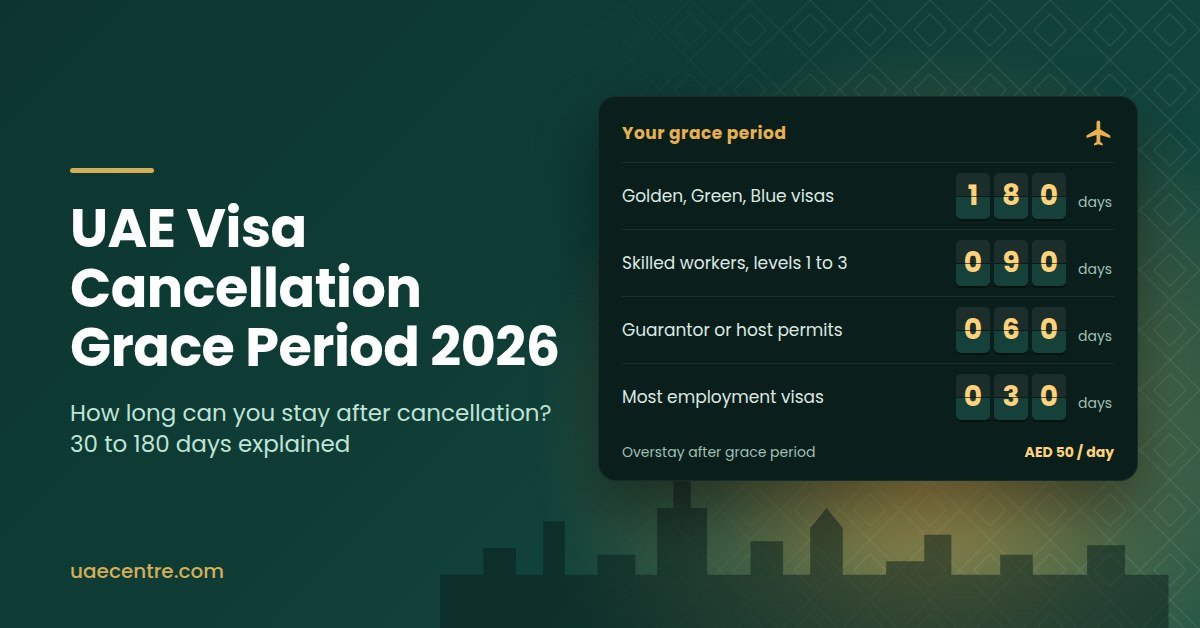
Quick answer: After your UAE residence visa is cancelled or expires, you get a grace period of 30, 60, 90 or 180 days depending on your visa category. Most standard employment visas get 30 days, skilled workers in levels 1 to 3 get 90 days, and Golden, Green and Blue visa holders get 180 days. After the grace period ends, you’re fined AED 50 for every extra day you stay.
What Is a Visa Grace Period?
A grace period is the time you’re legally allowed to stay in the UAE after your residence visa has been cancelled or has expired. During this window, you’re not overstaying and you won’t be fined.
It exists so you can sort out your next step calmly: find a new job, switch to a different visa, pack up your home, or book your flight out. Once it ends, daily fines start, and things get more complicated.
UAE Grace Period by Visa Type (2026)
These are the grace periods ICP currently publishes for residence permits that have been cancelled or have expired:
| Visa category | Grace period |
|---|---|
| Golden, Green and Blue Residence holders and their family members | 180 days |
| Widows and divorced women of residents | 180 days |
| Students who have completed their studies | 180 days |
| Foreign passport holders who are relatives of UAE citizens | 180 days |
| Skilled workers in levels 1 to 3 | 90 days |
| Property owners on a property residence visa | 90 days |
| Residence permits issued with a guarantor or host | 60 days |
| All other categories (including most standard employment visas) | 30 days |
Source: ICP residence permit services.
Am I a skilled worker in levels 1 to 3?
MOHRE groups jobs into skill levels based on your job title and qualifications. Levels 1 to 3 generally cover professional, managerial and technical roles that usually need a degree or diploma, such as engineers, accountants, nurses and managers. If you’re unsure, your skill level is linked to the job title on your MOHRE work permit. Check it in the MOHRE app or ask HR before your visa is cancelled.
A note for Dubai visa holders
If your visa was issued in Dubai, your file is handled by the General Directorate of Residency and Foreigners Affairs (GDRFA Dubai), not ICP. GDRFA publishes its own periods for each category, and for many Dubai residence visas the standard period is 60 days. Don’t assume the ICP table applies to you. Always check the date shown on your own record.
Visit and tourist visas are different. These generally have no grace period after they expire, so fines can start almost immediately. If you’re in the UAE on a visit visa, leave or extend before the expiry date.
When Does Your Grace Period Start?
This is where many people get caught out. Your grace period starts from the date your residence permit is cancelled, or the date it expires, whichever happens first. It does not start from your last working day.
For mainland employees, the process has two steps. Your employer first cancels your work permit with MOHRE, then cancels your residence visa with ICP or GDRFA. Experts often advise mainland workers to count their grace period from the labour cancellation date to be safe, because there can be a gap of a few days between the two steps. Free zone employees should count from the residence cancellation date.
Example: Sara’s employment visa (30-day category) is cancelled on 5 October. Her grace period ends on 4 November. If she’s still in the UAE on 5 November without a new visa, fines of AED 50 per day begin. If she stays until 24 November, she’ll owe AED 1,000.
What If Your Employer Won’t Cancel Your Visa?
Sometimes the problem is the opposite: you’ve left the job, but your employer hasn’t cancelled your work permit or visa. This can block you from joining a new company, and if your visa later expires, your grace period starts running anyway.
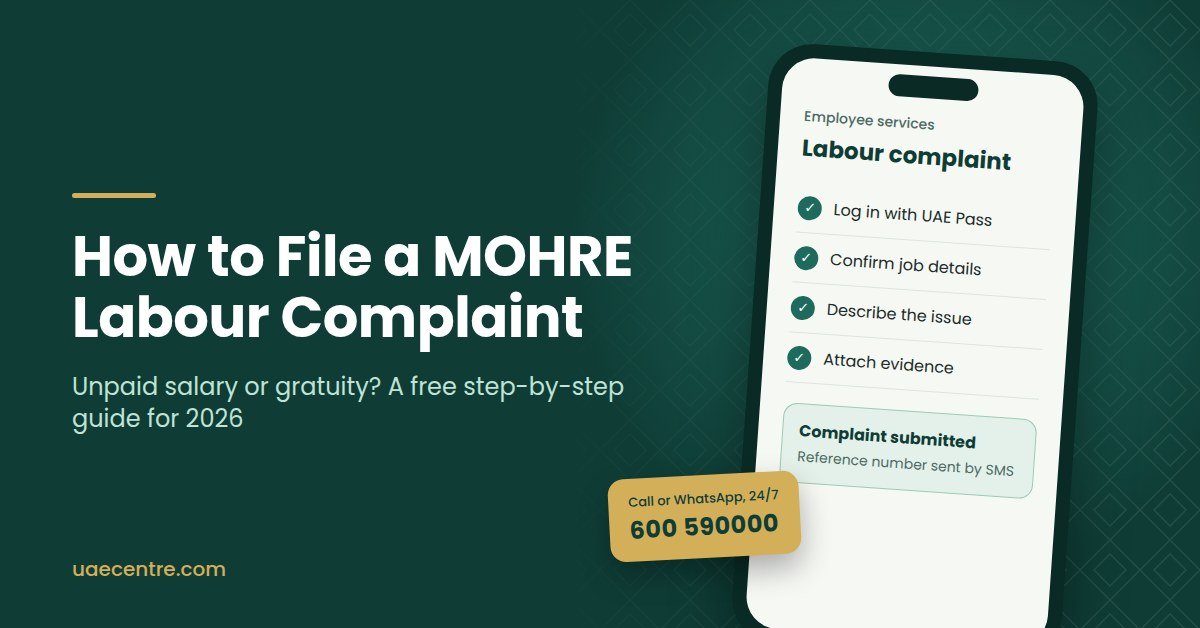
First, ask HR in writing to complete the cancellation and give them a clear date. Keep a copy of your message. If nothing happens, you can raise it with MOHRE. Refusing to cancel a work permit after the employment has ended is a valid reason to file a MOHRE labour complaint, and MOHRE can step in to process it.
Also be careful with what you sign. Some employers ask you to sign a final settlement or cancellation form before paying your dues. Read it properly, and don’t confirm you’ve received money that hasn’t reached your account.
How to Check Your Exact Grace Period
Don’t rely on guesswork, or on what your HR department says from memory. Check your own record using one of these methods:
- Your cancellation paper. The visa cancellation document your employer receives usually shows the date by which you must leave or change your status. Ask HR for a copy.
- ICP Smart Services. Log in to the ICP Smart Services portal or the UAEICP app with your UAE Pass and check your file status. This works for visas issued in Abu Dhabi, Sharjah, Ajman, Umm Al Quwain, Ras Al Khaimah and Fujairah.
- GDRFA Dubai. For Dubai-issued visas, check through the GDRFA Dubai website or app, or call Amer on 800 5111.
- ICP call centre. Call 600 522222 from inside the UAE (+971 600 522222 from abroad).
Do this on the day your visa is cancelled and write the deadline somewhere you’ll see it. Set a reminder on your phone a week before it ends.
What You Can Do During Your Grace Period
You’re not obliged to leave the country just because your visa has been cancelled. During the grace period, you can choose one of these options:
- Join a new employer. If you find a new job, your new employer can apply for your work permit and residence visa while you’re still inside the UAE. Avoid scams during your search and learn to spot fake job offers.
- Move to a family visa. If your spouse or parent works in the UAE and meets the salary and housing requirements, they can sponsor you.
- Switch to a jobseeker or visit visa. If you need more time to look for work, you may be able to change to a job exploration (jobseeker) visa, if you qualify, or a visit visa without leaving the country. Fees apply.
- Apply for a Green or Golden visa. Freelancers, skilled employees and investors who meet the criteria can apply for self-sponsored residence.
- Leave the UAE. If you’re moving home or abroad, book your flight before your grace period ends.
For a full overview of the visa types available, see our UAE Visa Rules 2026 guide.
What Happens to Your Family’s Visas?
If you sponsor your spouse, children or parents, their visas depend on yours. In most cases, your family members’ residence visas must be cancelled (or moved to a new sponsor) before or alongside your own cancellation.
Each family member then gets their own grace period based on their category. Families of Golden, Green and Blue visa holders get 180 days. For others, check each person’s record individually, since dates can differ. If you’re starting a new job, your family can usually be transferred onto your new visa once it’s issued, so plan the timing carefully.
Overstay Fines: What If You Miss the Deadline?
If you stay past your grace period without a new visa, you’ll be fined AED 50 for each extra day. The fine applies from the day after your grace period ends.
| Days overstayed | Fine (AED) |
|---|---|
| 1 day | 50 |
| 10 days | 500 |
| 30 days | 1,500 |
| 90 days | 4,500 |
Overstay fines must be paid before you can get a new UAE visa, and they can cause delays when you leave. Long overstays can also lead to more serious problems with future entry. If you’ve already overstayed, don’t hide from it. Contact ICP or GDRFA, pay the fine, and regularise your status as soon as possible.
Before Your Visa Is Cancelled: A Quick Checklist
If you know your job is ending, use the time before cancellation wisely. Once your visa is cancelled, some things become much harder to sort out.
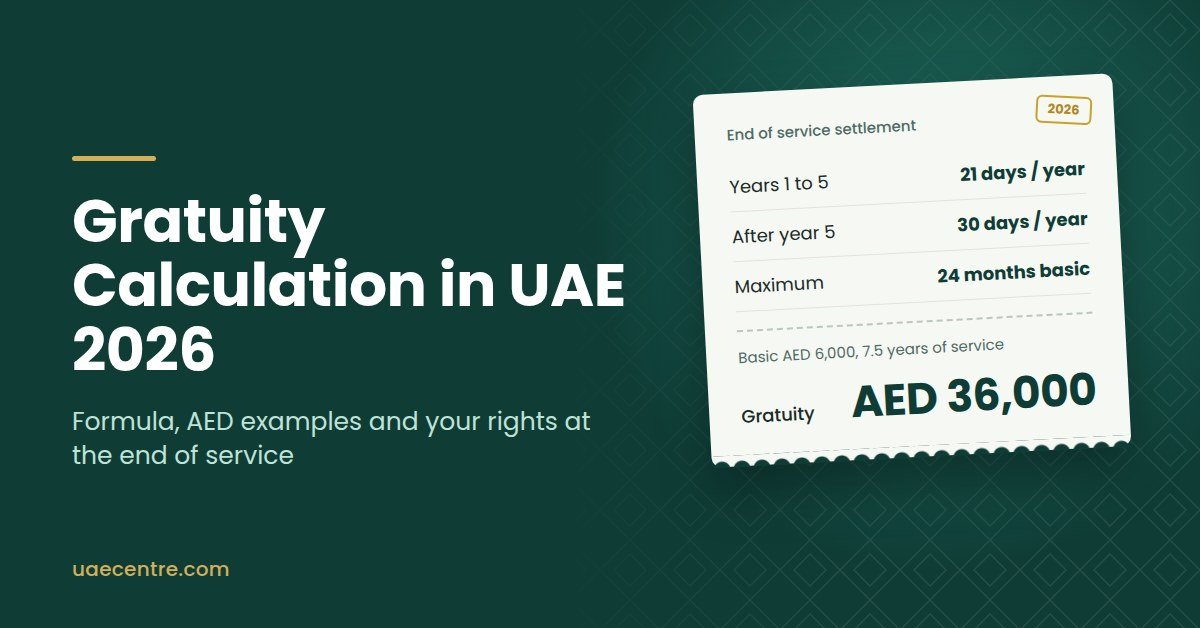
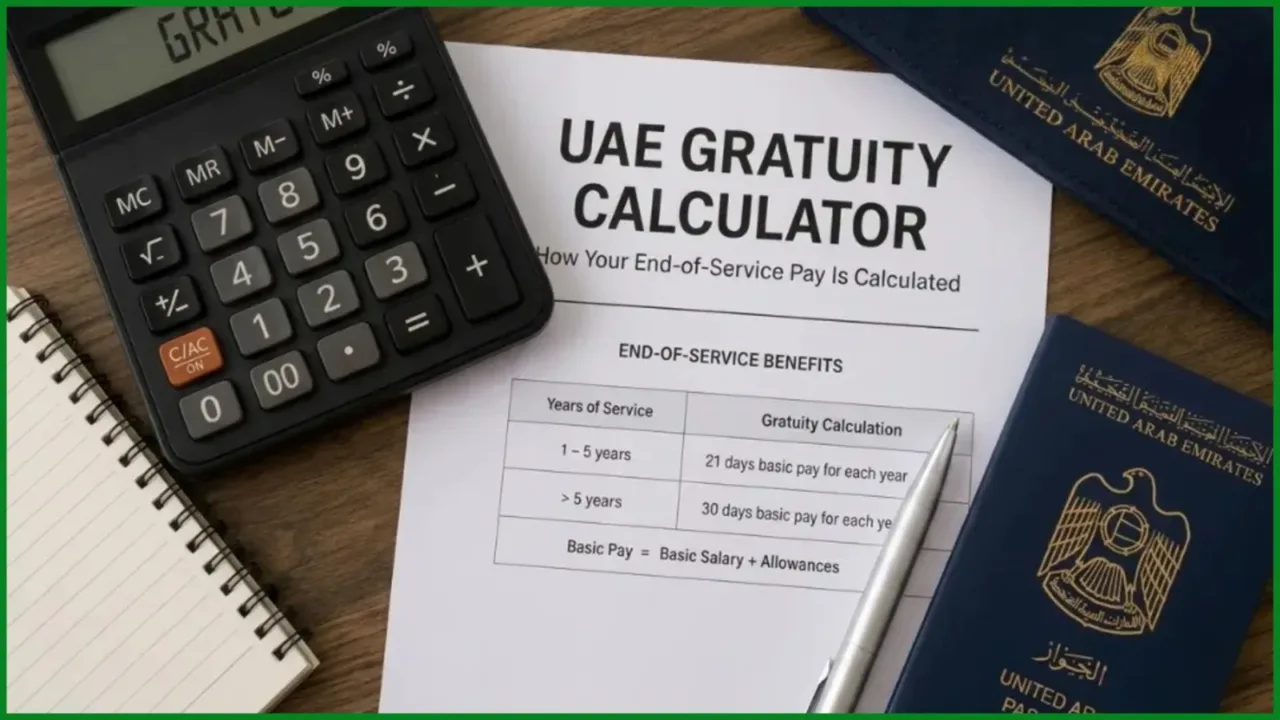
- Collect your final settlement. Your employer must pay your end of service dues within 14 days. Check your gratuity figure before you sign anything.
- Know your options if you’re not paid. You can still file a MOHRE labour complaint after your visa is cancelled, and it’s far easier while you’re in the UAE.
- Clear bank loans and credit cards, or agree a repayment plan with your bank. Unpaid debts can lead to travel bans.
- Check your health insurance. Employer cover usually ends with your job. Get private cover if you’ll stay for a while.
- Close or transfer utilities, tenancy and car registration if you’re leaving.
- Save copies of everything: your contract, payslips, experience letter and cancellation paper. You’ll need them later.
Mistakes to Avoid
- Counting from your last working day. The clock runs from cancellation or expiry, not the day you stopped working.
- Trusting a number you read online. Check your own record on ICP or GDRFA. Rules differ by category and by emirate.
- Assuming your family has the same deadline. Each person’s grace period can be different.
- Waiting until the last week. Visa changes can take several working days. Start early.
- Signing a final settlement you haven’t checked. Once your visa is cancelled and you’ve signed, chasing missing money becomes harder.
A cancelled visa feels like a deadline hanging over you, but you usually have more time and more options than you think. Check your exact grace period on the day of cancellation, decide whether you’re staying or leaving, and act early rather than in the final week.
And before your visa is cancelled, make sure you’ve received everything you’re owed. Our guides on calculating your gratuity and filing a MOHRE labour complaint will help you leave your job on the right terms.
Official sources: ICP residence permit services, GDRFA Dubai and the Ministry of Human Resources and Emiratisation (MOHRE).
This guide is for general information and is not legal advice. Grace periods and procedures can change, so confirm your exact deadline with ICP or GDRFA. Last reviewed: October 2026.