It’s that time of year again. Appraisals are coming, budgets are being set, and everyone is quietly wondering the same thing: will I get a raise next year?
New salary surveys released this week give us a pretty clear answer. Most UAE employers are planning modest pay rises in 2027, with some sectors and skills doing much better than others.
Here’s what the numbers say, who’s most likely to get a raise, and how to make your own case.
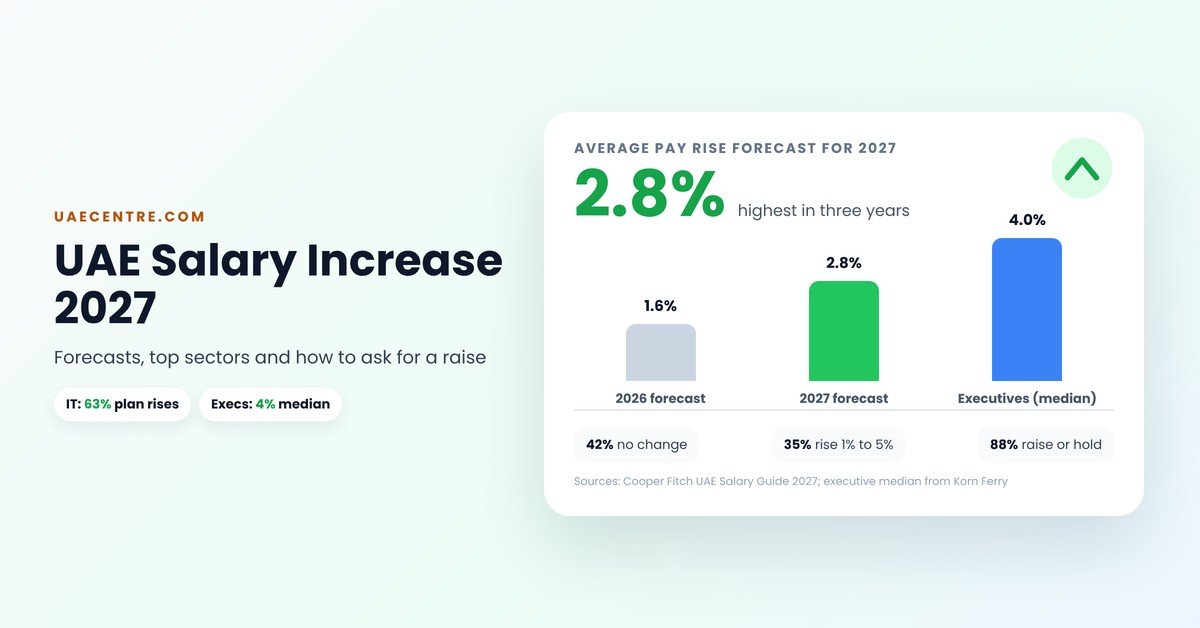
Quick answer: UAE employers expect an average salary increase of 2.8% in 2027, according to Cooper Fitch’s UAE Salary Guide 2027, the highest forecast in three years. 42% of employers plan no change to salary ranges, and 35% plan rises of 1% to 5%. IT leads, with 63% of tech employers planning increases, while 70% of government employers expect no change. Korn Ferry projects an average of 3.3%, with executives at a median of 4%.
UAE Salary Forecasts for 2027
| Source | 2027 forecast |
| Cooper Fitch UAE Salary Guide 2027 | Average rise of 2.8% |
| Korn Ferry Total Rewards Pulse Survey | Average 3.3%, median 3.2% |
| Korn Ferry, executives and senior managers | Median 4.0% |
| Korn Ferry, middle management and clerical | Around 3.0% to 3.2% |
Cooper Fitch surveyed about 1,091 organisations employing around 500,000 people. Its founder has said the real figure could end up closer to 4%, since actual pay rises have beaten the forecasts in recent years. For comparison, the same guide forecast just 1.6% for 2026.
What Most Employers Are Planning
| Employer plan for 2027 | Share of employers |
| Keep salary ranges unchanged | 42% |
| Raise salaries by 1% to 5% | 35% |
| Increase or maintain salary ranges overall | 88% |
In other words, a raise isn’t automatic. But nearly nine in ten employers plan to at least keep salary ranges where they are.
Which Sectors Are Most Likely to Pay More?
- Information technology is the clear leader: 63% of IT employers plan pay rises.
- Banking, financial services and insurance are also expected to raise salaries.
- Retail, e-commerce and luxury goods are set to increase pay too.
- Large organisations are more likely to offer rises than midsized firms (251 to 1,000 staff), which are expected to keep salaries flat.
- Government and the public sector are the most likely to stay flat, with 70% expecting no change.
The Skills Employers Are Fighting For
If you want a bigger raise, skills matter more than job titles. According to the survey, the hardest roles to fill are:
- Sales and business development
- Technical and engineering roles
- Roles needing AI, data and technology skills
Specialists in AI, financial services and real estate are also expected to stay in strong demand. People with these skills often get well above-average raises, sometimes by switching jobs.
What About Hiring?
The hiring outlook is mixed. 42% of employers expect to grow their workforce in 2027, down from 48% in the previous survey. 32% expect to stay the same, and 26% expect some reduction. Competition for mid-level jobs remains strong, because the UAE keeps attracting large numbers of jobseekers.
Is 2.8% Really a Raise?
This is the honest question. A small raise can be swallowed by rising costs. In 2026, residents have faced higher fuel prices and rents, and schooling remains expensive.
So, before celebrating or worrying, work out your real position. Our cost of living guide helps you see where your money goes, and whether a raise actually improves your monthly budget, including what you can save or send home.
How to Ask for a Raise in 2027
- Time it well. Ask before budgets are fixed, usually at your appraisal or before the new year.
- Bring evidence. List your results: targets hit, money saved, projects delivered, extra responsibilities.
- Know your market value. Check salary guides and job ads for similar roles in the UAE.
- Ask for a specific number, and explain why it’s fair.
- Be flexible. If cash is tight, ask about a bonus, training, a better title, extra leave or a review in six months.
- Stay professional. Even if the answer is no, ask what you’d need to achieve to get a raise next time.
Smart tip: ask about your basic salary. Your end-of-service gratuity is calculated on your basic salary, not allowances. A raise to basic pay is worth more in the long run than the same amount added to an allowance.
Thinking of Switching Jobs?
Many people get their biggest pay jumps by changing employers. If you’re considering it:
- Compare the full package: basic salary, allowances, housing, schooling, health insurance and bonus.
- Check how leaving will affect your gratuity, especially if you’re close to completing five years.
- Get the new offer in writing, and check it matches your MOHRE contract.
- Make sure the salary meets any visa needs, such as the minimum salary to sponsor your family.
Know Your Rights Too
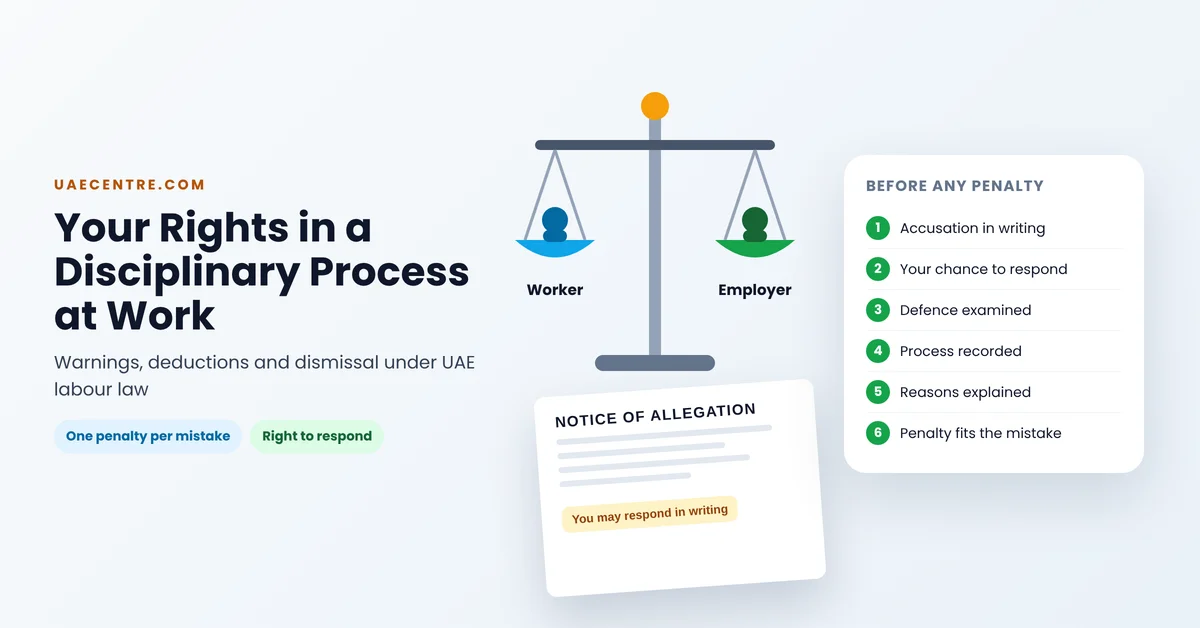
Whatever happens with raises, your agreed salary must be paid in full and on time. If it isn’t, you can file a free MOHRE complaint. And if you’re worried about warnings or deductions at work, read our guide to your rights under the disciplinary rules.
Frequently Asked Questions:
Final Word: Make Your Case Early
2027 won’t be a year of big raises for everyone, but it’s better than recent years. The people who do best will be those with in-demand skills, clear results and the confidence to ask. Prepare your evidence now, know your market value, and start the conversation before budgets are locked.
Sources: Cooper Fitch UAE Salary Guide 2027 and Korn Ferry Total Rewards Pulse Survey, as reported by The National, Khaleej Times and ARN News Centre.
This article is for general information. Salary forecasts are surveys of employer plans, not guarantees, and your own pay depends on your employer, role and performance. Last updated: 18 November 2026.