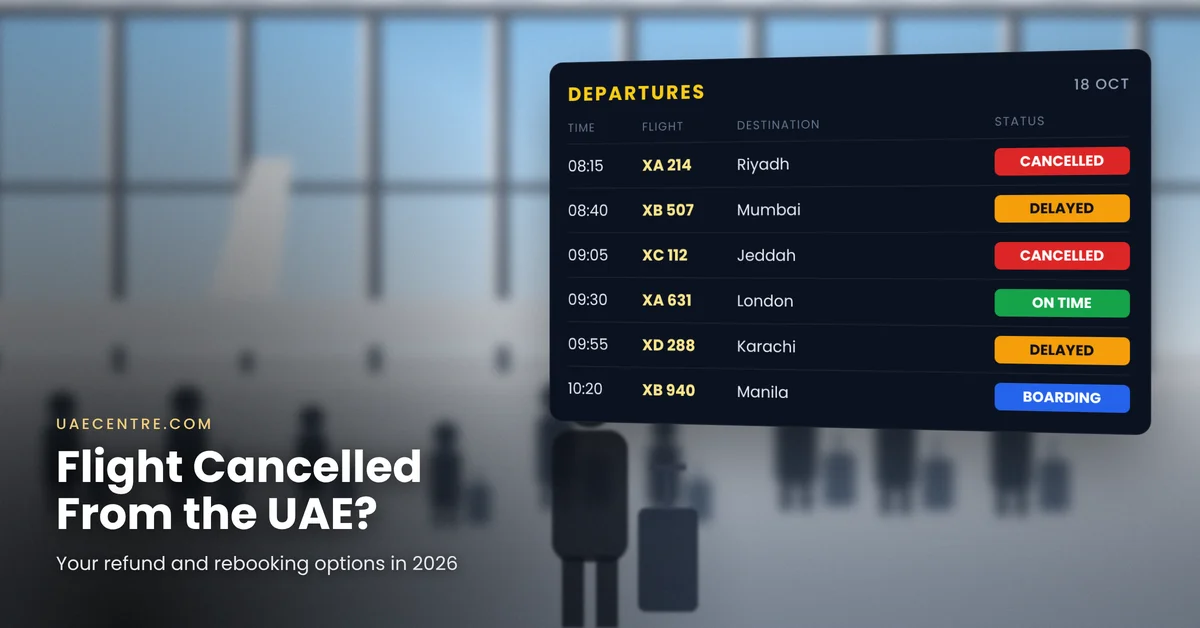
You’ve packed, booked the taxi and set an early alarm. Then the notification arrives: your flight has been cancelled. Or you’re already at the airport, staring at a departures board that keeps pushing your flight back by another hour.
This month, many UAE travellers know that feeling. Several airlines have cancelled or adjusted flights to some regional destinations, including routes to Saudi Arabia, and delays are being recorded at both Dubai International and Zayed International airports, even though both remain open with flights operating across much of their networks.
Whether your trip is affected now, or you’re planning to fly during the busy winter season, here’s how to protect your money and your plans.
Quick answer: If the airline cancels your flight, you can usually choose free rebooking or a refund for the unused part of your ticket, even on many non-refundable fares, though the exact options depend on the airline and its current disruption policy. If you cancel, your fare rules apply and refunds may be limited. Booked through a travel agent? Contact the agent, as they usually handle changes. Always check your airline’s official disruption page, and rebook before requesting a refund if you still want to travel.
The Most Important Question: Who Cancelled the Flight?
Almost everything about your rights depends on this:
| Situation | What usually happens |
| The airline cancels the flight | You can usually rebook free of charge or request a refund for unused segments, depending on the airline’s disruption policy |
| The airline makes a major schedule change | Many airlines let you accept the change, choose another flight or request a refund |
| You decide not to travel (flight still operating) | Your fare rules apply. Non-refundable tickets may only give a partial refund of taxes, a voucher or nothing |
| You miss a connection on the same ticket because of a delay | The airline normally rebooks you on the next available connection |
| You miss a flight on a separate ticket | The second airline usually isn’t responsible, so you may need to buy a new ticket |
That last point catches many travellers out. Booking connections on one ticket gives you far more protection than piecing together separate tickets to save money.
What to Do Straight Away if Your Flight Is Cancelled
- Check the official flight status on your airline’s website or app, and on the Dubai Airports or Zayed International channels. Don’t rely only on social media or forwarded messages.
- Make sure your contact details are up to date in Manage Booking, so you get rebooking emails and SMS alerts.
- Don’t rush to the airport unless your airline confirms you’re booked on an operating flight. Airports may restrict entry to passengers with confirmed bookings during disruptions.
- Decide: rebook or refund? If you still need to travel, rebook first. Requesting a refund can cancel the unused parts of your ticket, which may remove your seat on later flights.
- Booked through an agent? Contact the agent or online booking site. Airlines often send agency-issued tickets back to the agent for changes and refunds.
- Keep records. Screenshot the cancellation notice, save emails and keep receipts for any meals, hotels or transport you pay for.
How UAE Airlines Typically Handle Cancellations
Each airline runs its own disruption policy, and these can change from week to week during unusual events. In general:
- Emirates: affected passengers are directed to the flight status page and Manage Your Booking for rebooking, refund and eligibility options. During disruptions, Emirates has offered rebooking windows and refunds for cancelled flights, including unused parts of multi-leg journeys.
- Etihad Airways: separates airline-initiated cancellations from passenger choices. When Etihad cancels, passengers can usually rebook or request a refund online or through their travel agent.
- flydubai: when flydubai cancels, qualifying passengers have typically been able to rebook on another flydubai flight within a set window. If you choose not to travel, check whether you’re being offered a refund to your card or a flydubai voucher, and ask about both.
- Air Arabia: offers rebooking and refund options for flights it cancels, handled online or through its contact centre and agents.
Refund or voucher? Some airlines offer travel vouchers by default. Vouchers can be useful if you’ll fly with that airline again soon, but read the expiry date and rules. If the airline cancelled your flight and you’d rather have your money back, ask clearly whether a refund to your original payment method is available.
Flight Delays: What You Can Expect
Long delays are frustrating, especially with children or connections to catch. Depending on the airline and the length of the delay, you may be offered meal vouchers, refreshments or, for overnight delays, hotel accommodation, particularly if you’re connecting through the airline’s hub. Ask the airline’s service desk what support is available, and keep receipts if you’re told to pay and claim back later.
Delays can also come from the weather. During heavy rain, fog or dust storms, flights may be held or diverted. Our guide to bad weather in the UAE explains the alerts to watch for.
Does Travel Insurance Cover Cancelled Flights?
Sometimes, but read the small print carefully. Many travel insurance policies cover trip cancellation, delays and missed connections, but some exclude events linked to war, conflict, airspace closures or government travel advisories. Others only cover you if you bought the policy before the disruption was publicly known.
Before relying on insurance, check your policy wording or call your insurer, and ask specifically whether your situation is covered. If you have a premium credit card, it may include travel cover too, often only when you paid for the ticket with that card.
If Your Refund Doesn’t Arrive
- Give it a reasonable time. During major disruptions, airlines handle huge numbers of requests, and refunds can take several weeks.
- Follow up in writing with your refund reference number.
- Contact your travel agent if you booked through one, since the refund often goes back to them first.
- Speak to your bank or card issuer. If you paid by card and the service wasn’t provided, your bank may be able to help through a dispute process.
- Escalate to the regulator if needed. If an airline doesn’t respond, you can raise the matter with the relevant civil aviation authority, such as the UAE’s General Civil Aviation Authority.
If you’re flying with a European or Indian airline, or from an airport in those regions, their own passenger rights rules may give you extra protection or compensation.
Stuck Abroad and Due Back at Work?
If a cancelled flight means you can’t return on time, tell your employer as early as possible, in writing, and attach the airline’s cancellation notice. Most managers are understanding when they hear early and see proof. Ask HR how the extra days will be treated, for example as extra annual leave, unpaid leave or remote work, so there are no surprises on your payslip later.
Stuck Abroad or Stuck in the UAE? Watch Your Visa
Cancelled flights can create visa headaches. If you’re a resident stuck abroad, check that your residence visa and Emirates ID remain valid for your return. If you’re a visitor or someone whose residence visa has been cancelled and your flight out has been cancelled, keep track of your visa grace period and contact ICP or GDRFA Dubai early if a cancellation means you may overstay. Keep your cancellation notice as proof.
Travelling With Children or Elderly Parents
Disruptions are hardest on families. If you’re travelling with young children or older relatives, pack a small “delay kit” in your hand luggage: snacks, water, a change of clothes, chargers, any daily medicines and copies of important documents. At the airport, ask the airline’s staff whether priority rebooking or seating help is available for families and passengers who need assistance. And if you’re rebooked onto a much later flight, consider whether returning home and coming back later is less tiring than waiting for hours in the terminal.
A Quick Checklist Before You Leave for the Airport
- Flight status checked on the airline’s official app or website within the last hour
- Booking reference, passport, Emirates ID and visa (if needed) ready
- Phone fully charged, with a power bank in your bag
- Airline app installed and logged in, so you can rebook quickly if needed
- Travel insurance details and emergency number saved on your phone
- Extra time allowed for check-in and security during busy or disrupted periods
Planning Winter Travel? How to Protect Yourself
The winter school break runs from 14 December 2026 to 3 January 2027, and it’s one of the busiest travel periods of the year. You can find all the dates in our UAE school holiday dates article. If you’re booking now, especially with ongoing uncertainty on some routes, a few smart choices make a big difference:
- Book directly with the airline where possible. It’s usually faster to rebook or get refunds than through third-party sites.
- Choose flexible fares if your plans might change. The extra cost can be worth it.
- Keep connections on one ticket rather than separate bookings.
- Buy travel insurance early and check the exclusions, especially for regional disruptions.
- Avoid the tightest connections, and allow a buffer day before important events back home, such as weddings, exams or Diwali with family.
Frequently Asked Questions:
Final Word: Stay Calm, Check Official Channels, Keep Records
A cancelled flight is stressful, but most problems are solvable if you act calmly and in the right order: check the official status, update your contact details, decide whether to rebook or refund, and keep every receipt and email. And for future trips, a few smart booking choices can save you a lot of trouble when plans change unexpectedly.
Official sources: General Civil Aviation Authority and Dubai Airports. Always check your airline’s own disruption page for the latest options.
This guide is for general information. Airline policies, refund options and insurance terms vary and can change quickly during disruptions, so always confirm details with your airline, travel agent or insurer. Last updated: 18 October 2026.