Published: Thursday, 16 July 2026, at 10:23 am| Dubai | Edited: Thursday, 16 July 2026, at 10:29 am
The Falklands sovereignty dispute has erupted onto the global football stage following a dramatic World Cup semi final match. Read on to know more about this developing story and the deep history behind it.
ALSO READ:
- Why Brazil Lost to Norway?: 3 Core Reasons for the Shocking World Cup Exit
- Double Standards in World Cup?: Messi Escapes Red Card While Bosnia Player Gets Sent Off for the Same Foul
- Will 2026 Be the Most Controversial World Cup in History? Inside the Geopolitical Drama
Falklands Geopolitical Row Ignites at World Cup After Argentina Defeats England
A post match victory celebration by Argentine players has sparked a major international sporting controversy.
Argentina secured a thrilling 2-1 comeback victory against England in Atlanta, booking their spot in the World Cup final against Spain. Late goals from Enzo Fernandez and Lautaro Martinez sealed the win against Thomas Tuchel’s English side.
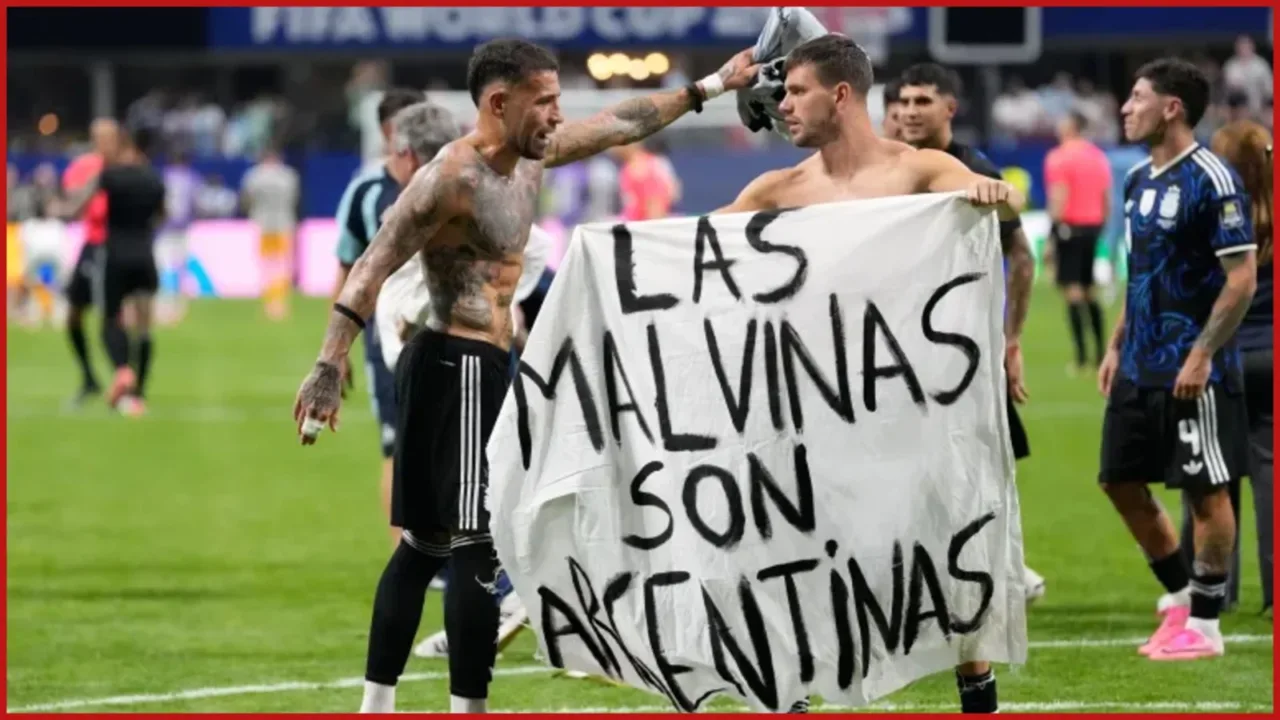
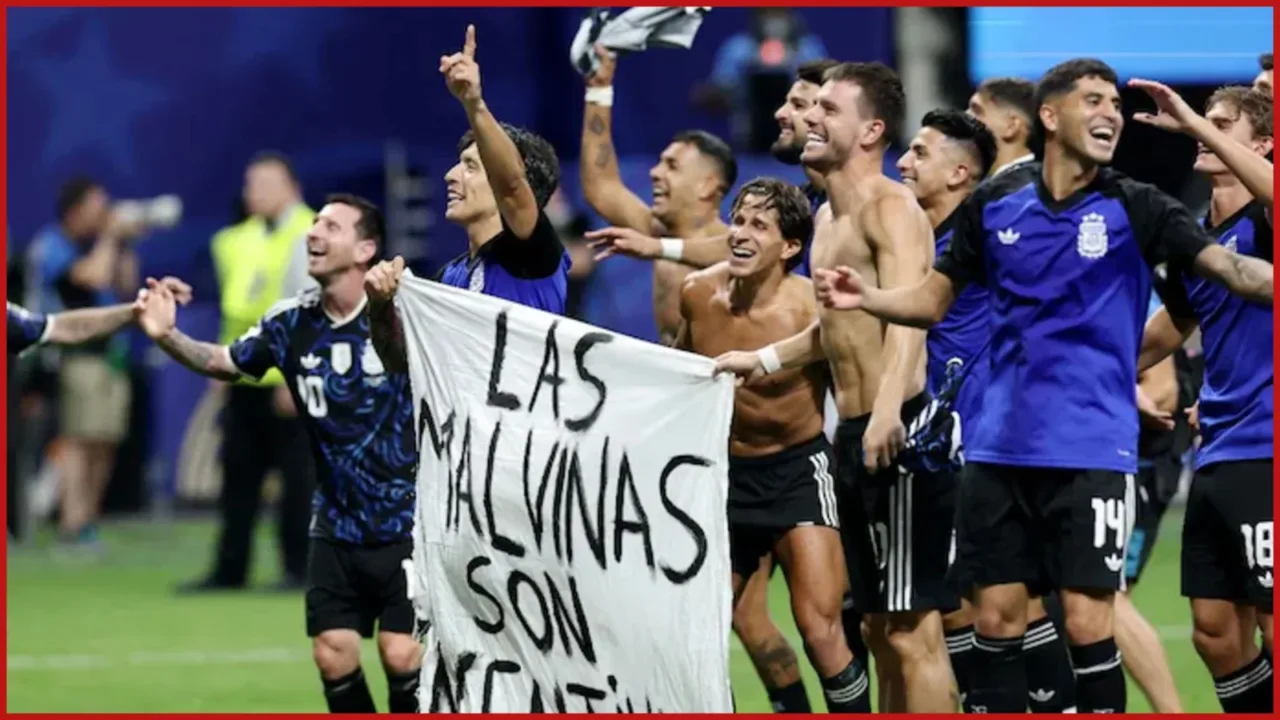
However, the post match celebrations quickly turned political. The Argentine players displayed a banner reading ‘Las Malvinas son Argentinas‘ (The Falklands are Argentine).
This instantly drew backlash because political statements are strictly banned in stadiums. Argentina’s Vice President, Victoria Villarruel, fueled the fire on social media, stating the match was ‘about putting the invaders in their place’. In contrast, manager Lionel Scaloni had urged everyone before the game not to mix football with political history.
Understanding the Falklands Dispute
The territorial row over these remote South Atlantic islands dates back to the early 19th century.
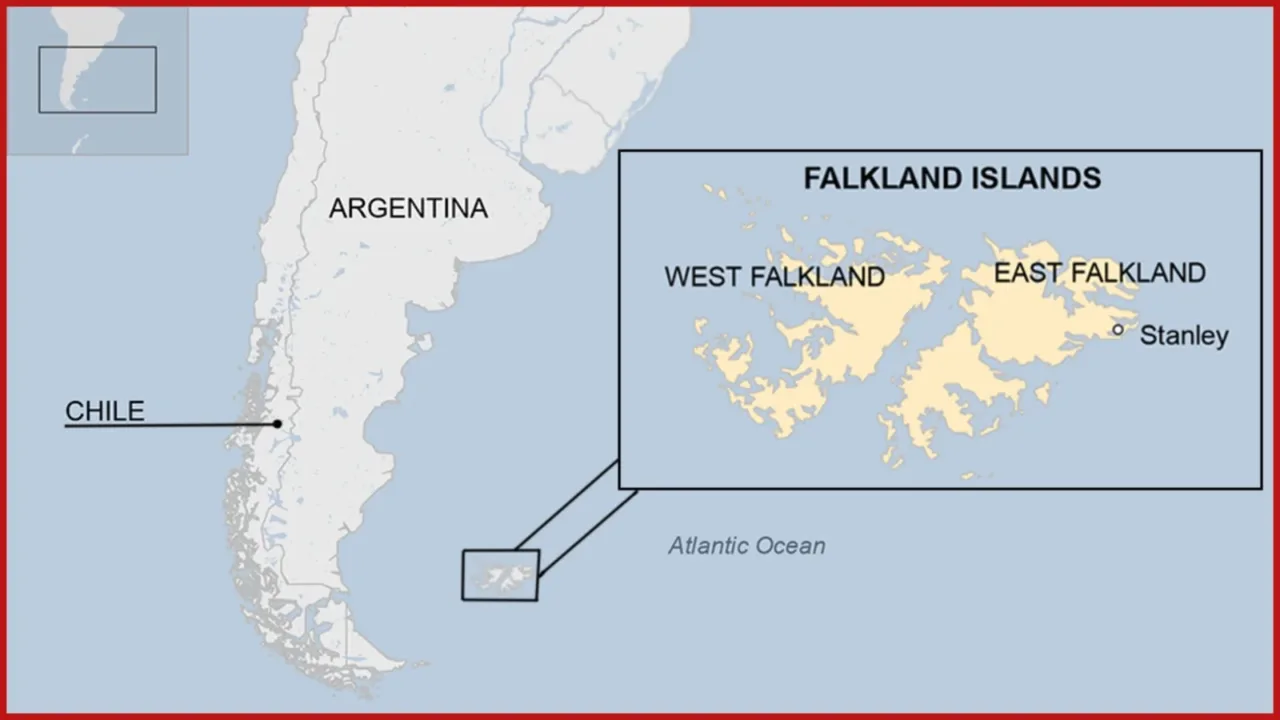
The Falklands consist of a remote group of islands in the South Atlantic Ocean. They sit roughly 300 miles from the Argentine coast and 8,000 miles away from Great Britain.
- The British Stance: The UK maintains de facto control and has overseen continuous administration of the territory since 1833.
- The Argentine Stance: The Argentina sovereignty claim dates back to 1810, with the nation arguing it inherited the islands from Spain after gaining independence.
ALSO READ:
- UAE’s First Legal Betting Platform: How to Play ‘Play971’ and What Are the Rules?
- Decoding the Deal; 5 Reasons Why Cristiano Ronaldo Bought into a Second Division Spanish Club
The 1982 Military Conflict
The territorial tensions escalated into a short but deadly undeclared war in 1982.
Diplomatic tensions turned into an open military conflict when the Argentine military junta invaded the territory. The Falklands War lasted for 74 days between April and June 1982.
Britain responded swiftly by sending a naval task force to reclaim the territory. The conflict ended in a British victory but left a tragic legacy, costing the lives of 649 Argentine and 255 British military personnel, alongside three island residents.
Self Determination vs Sovereignty Claims
Modern diplomatic arguments center around the democratic choices of the local population versus historical ties.
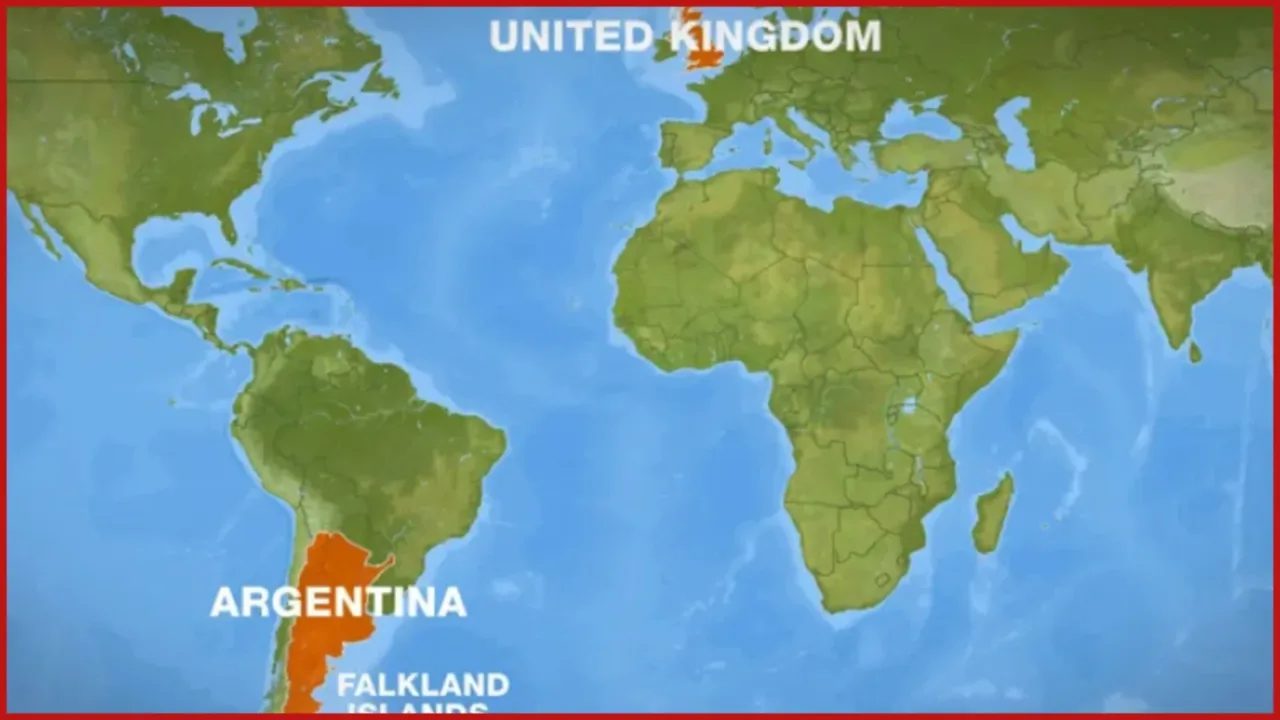
Today, the United Kingdom bases its territorial defense on the democratic right of self determination.
- In a 2013 referendum, 99.8% of Falkland Islanders voted overwhelmingly to remain a British Overseas Territory.
- The UK insists that the Falkland Islanders are British citizens who possess the right to choose their own allegiance.
- Argentina rejects this vote, calling the population ‘artificially implanted’.
Tensions rose significantly when Argentina officially withdrew from the Foradori Duncan pact, a 2016 bilateral trade agreement, reviving its aggressive Argentina sovereignty claim.
Football, Politics, and Impending FIFA Sanctions
World football’s governing body is reviewing the incident as it strictly prohibits political messaging during games.
FIFA is currently reviewing the actions of the Argentine team to see if they violated FIFA disciplinary rules regarding political misconduct.
- This is not a new issue, back in 2014, FIFA fined the Argentine Football Association £20,000 for displaying the exact same banner during a friendly match against Slovenia.
- Current FIFA disciplinary rules explicitly forbid teams from making political gestures on the pitch.
With passions running high after the match, the football world now waits to see how severely the governing body will penalize the team ahead of the World Cup final.
ALSO READ:
Conclusion
This intense World Cup clash proves that historical wounds between Argentina and England remain deeply tied to sports.
FAQs
Why did Argentina players hold up a banner about the islands?
They held the banner to assert their country’s historical claim over the British territory after beating England.
What was the outcome of the 1982 Falklands War?
The UK won the 74-day war, maintaining its administration over the territory.
Why is FIFA considering taking disciplinary action against Argentina?
FIFA rules strictly forbid players from displaying political messages or banners during football matches.
How did the inhabitants vote in the 2013 referendum?
Over 99.8% of the local residents voted to remain a British Overseas Territory.