Published:Sunday, 27 September 2026, at 1:47 pm| Dubai | Edited:Sunday, 27 September 2026, at 1:57 pm
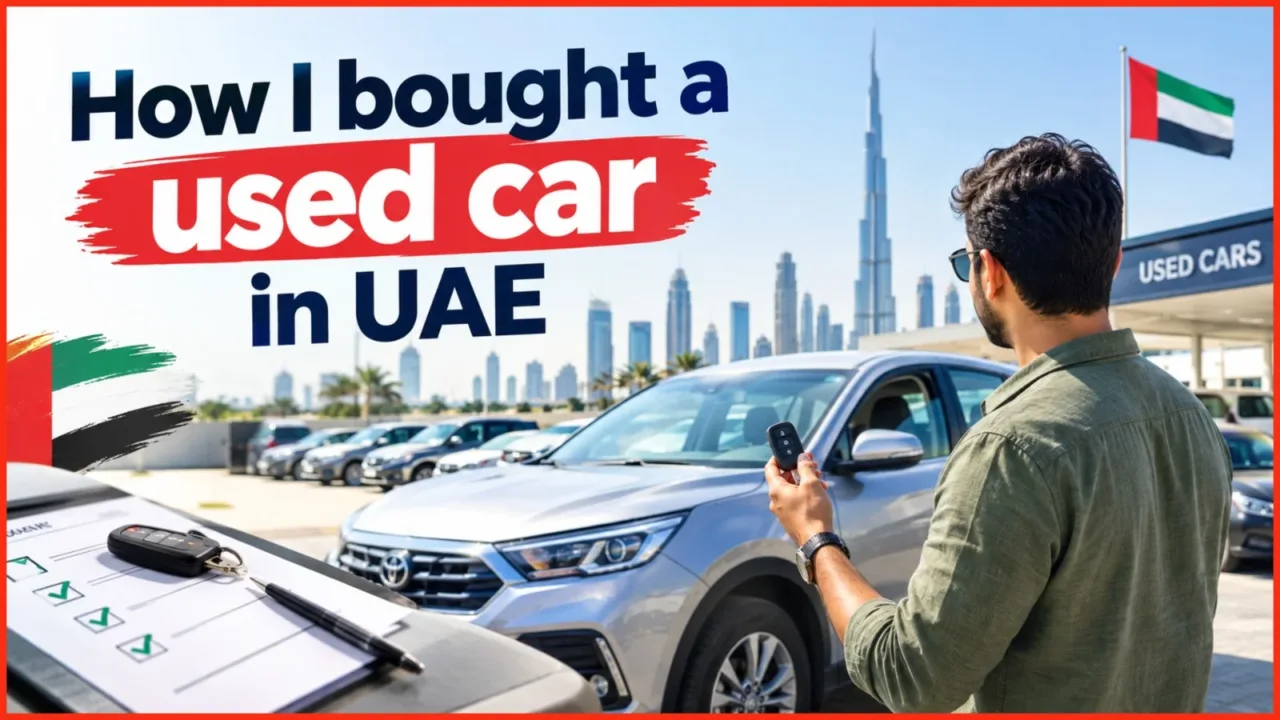
How I bought a used car in UAE without getting scammed or overspending is a process I am excited to share with you. Let us explore every step of this journey in detail.
ALSO READ:
- UAE Car Buyer’s Guide: Top Picks Under AED 100,000
- How to Complete Car Registration UAE?: Process, Fees, and Renewal Tips (The Ultimate Guide)
- Uber Apollo Go Dubai Driverless Taxis Launched: Here Is How to Book Your Ride
How I Bought a Used Car in UAE: A Complete Step by Step Buyer’s Guide
Drawing from my own experience and official guidance from the Ministry of Interior and RTA, I created this detailed guide for you.
- The pre-owned vehicle market in the UAE is vast, offers incredible value, and moves at a very fast pace.
- Buying used helps expats avoid steep first year depreciation while securing high quality, reliable transportation for daily commutes.
- Following a structured verification process protects your hard earned money from hidden accident damages and online scams.
- Understanding local registration laws ensures a smooth, stress free transaction from seller negotiation to final ownership transfer.
Pre-Purchase Research & Budgeting
Essential financial planning and specification choices before shopping.
Setting up a solid financial plan helped me narrow down options without running into unexpected ownership costs.
- Calculate hidden charges including RTA registration, comprehensive insurance premiums, Tasjeel inspection fees, and initial fluid servicing.
- Understanding GCC specs vs non GCC specs is crucial because local vehicles feature heavy duty radiators and stronger air conditioning systems.
- Imported non GCC cars often carry hidden flood records or severe chassis repairs from their home countries.
- Popular Japanese and regional models retain high resale value while offering cheap, easily available spare parts across the emirates.
Verifying Car History & Official Records
Checking official government databases for past accidents and financial liens.
Verifying background records on official portals saved me from making a costly mistake on a damaged vehicle.
- Use the Emirates Vehicle Gate (EVG) or Ministry of Interior portals to check UAE car accident history using the chassis number.
- Verify the Vehicle Identification Number (VIN) on international databases if you are inspecting imported US or European specification vehicles.
- Ensure the seller clears all outstanding traffic fines before visiting the registration center to complete ownership transfer.
- Confirm that the vehicle has no active bank mortgages or financial liens attached through the RTA system.
ALSO READ:
- School Zone Traffic Rules in UAE: 10 Mistakes That Can Cost You Up to Dh3,000
- How to Read Road Signs in UAE ?: A Complete Driving Guide 2026
Physical Inspection & Test Drive Checklist
Evaluating exterior bodywork, cabin electronics, and mechanical engine health.
Doing a meticulous personal inspection helped me identify minor cosmetic flaws to negotiate a fairer price.
- Examine body panels under bright sunlight to spot inconsistent paint thickness, misaligned panel gaps, or hidden rust spots.
- Test cabin electronics thoroughly, paying close attention to air conditioning performance, dashboard warning lights, and actual odometer readings.
- Take a long test drive to check engine responsiveness, smooth transmission gear shifts, and firm braking without pulling sideways.
- Inspect tire manufacturing dates and tread depth, ensuring all four tires match local UAE road safety standards.
Comprehensive Technical Inspection (RTA / Tasjeel)
Navigating mandatory government roadworthiness tests and mechanic reviews.
Passing official vehicle testing is a legal prerequisite for registering any pre-owned car in the UAE.
- Schedule an official RTA vehicle testing UAE inspection at Tasjeel, Shamil, or Mumayaz centers to verify roadworthiness.
- Pay for a comprehensive third-party mechanical evaluation if you are purchasing a premium or luxury pre-owned car.
- Review chassis test results carefully, as any structural repair will cause an immediate rejection during registration.
- Use minor testing faults highlighted by inspectors as leverage during final price negotiations with the seller.
Negotiation & Finalizing the Deal
Smart strategies for closing the purchase securely and at a fair price.

Approaching negotiations with technical facts helped me secure a great deal without falling for seller pressure tactics.
- Base your opening offer on market averages and the cost of immediate repairs highlighted in the technical report.
- Avoid sellers who refuse official testing, insist on cash payments without receipts, or rush the transaction.
- Never deposit advance booking money without receiving a signed written agreement and a copy of the seller’s Emirates ID.
- Ensure the seller agrees to handle all existing traffic fine clearances prior to the transfer appointment.
Vehicle Transfer, Registration & Insurance
Completing insurance setup and official RTA ownership card issuance.
Finalizing insurance coverage enabled me to transfer car ownership in Dubai in under thirty minutes.
| Step | Action Required | Location / Portal |
| Insurance | Purchase policy using VIN & seller’s Mulkiya | Online / Insurance Broker |
| Testing | Pass vehicle roadworthiness inspection | RTA Testing Center (Tasjeel) |
| Clear Fines | Pay all outstanding traffic violations | RTA / Dubai Police App |
| Transfer | Present IDs, pay fee, and print Mulkiya | RTA Customer Happiness Center |
- Choose comprehensive insurance coverage for newer models or third party liability for older, budget friendly commuting vehicles.
- Present valid Emirates ID, driving license, passing test certificate, and active insurance policy at the RTA counter.
- Complete the transaction using secure bank transfers or manager’s checks rather than carrying large sums of physical cash.
- Receive your new registration card (Mulkiya) immediately after paying the standard ownership transfer fees.
Post Purchase Maintenance & Ownership Tips
Immediate preventive maintenance and long-term resale protection strategies.
Performing routine maintenance right after purchase gave me complete peace of mind on UAE highways.
- Change engine oil, transmission fluid, coolant, air filters, and spark plugs immediately to reset your service baseline.
- Park under shaded structures or use heat-reflective windshield covers to protect dashboard leather and exterior paintwork.
- Keep every service invoice organized in a folder to prove regular maintenance when selling the car later.
- Address minor mechanical noises or fluid leaks promptly to prevent expensive repairs during summer months.
Conclusion
Following these steps ensures a safe and rewarding car buying journey across the UAE.
ALSO READ:
- How UAE Drivers Can Stay Safe in Dust Storms: 5 Rules You Shouldn’t Ignore
- How to Get Discounts on Traffic Fines in the UAE?: Dubai, Abu Dhabi, and Northern Emirates Rules
FAQs
What is the cost of transferring car ownership in Dubai?
Transferring ownership generally costs around 350 to 400 AED, excluding vehicle testing and insurance charges.
Can I register a non GCC spec car in the UAE?
Yes, provided it passes the mandatory RTA vehicle safety and chassis inspection tests.
Is third party insurance sufficient for a used car?
Third party insurance is legally sufficient, though comprehensive coverage is safer for high value vehicles.
How can I check if a used car was in a major accident?
You can check accident history on the EVG portal using the vehicle’s chassis number.
Do I need a valid UAE driving license to register a car?
Yes, a valid UAE driving license and Emirates ID are required to register ownership.