The healthcare landscape in the Emirates is witnessing a revolution with the introduction of robotic-assisted SEEG in the UAE. This advanced medical procedure offers new hope for patients struggling with complex neurological conditions.
RELATED READS: Abu Dhabi Achieves Medical Breakthrough with First CAR-T Therapy for Autoimmune Disease
Complete Guide to Dubai Medical Fitness Test for UAE Residence Visa: Centres, Timings, and Cost
Health Insurance in the UAE: What Expats Forget to Check
Robotic-assisted SEEG in the UAE: A Breakthrough in Epilepsy Care
This milestone represents the first time robotic technology has been used for deep-brain electrode placement in the Emirates.

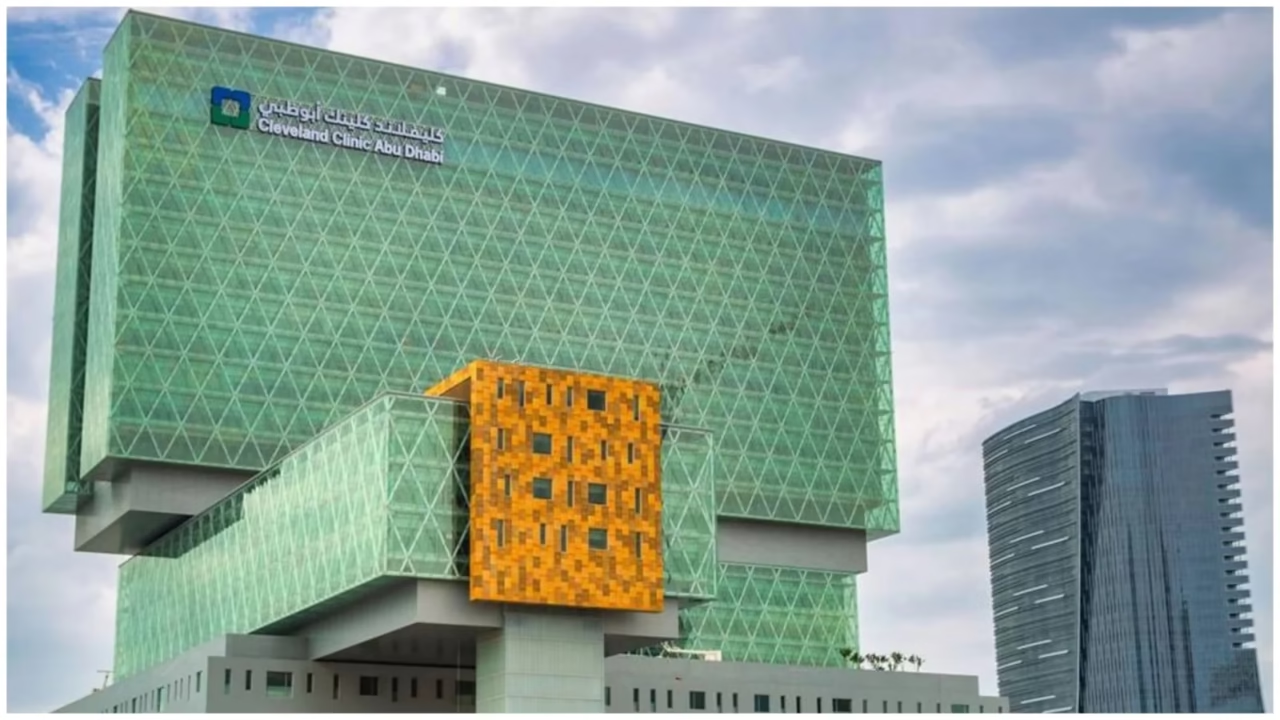
The successful implementation of robotic-assisted SEEG in the UAE marks a significant shift in how hospitals manage complex cases. By using robotic arms to guide the surgical process, doctors can now pinpoint the exact location of seizures with unmatched accuracy. This technology, recently adopted by Cleveland Clinic Abu Dhabi, has already shown positive results in its first few clinical applications, proving that the future of surgery is digital and automated.
Advancing Epilepsy Treatment in Abu Dhabi
Patients seeking epilepsy treatment in Abu Dhabi no longer need to travel abroad for high-end diagnostic care. The introduction of the robotic SEEG method allows for a more personalized approach to brain anatomy. Unlike older methods that required a heavy metal frame to be bolted to the skull, this robotic system is much more flexible and comfortable for the patient.
- Higher Precision: Robots eliminate human hand tremors, ensuring electrodes reach the target area perfectly.
- Faster Procedures: The time spent in the operating room is significantly reduced.
- Local Access: Abu Dhabi is now a regional hub for this specific seizure diagnostic technology.
Innovation at Cleveland Clinic Abu Dhabi Neurology
The Cleveland Clinic Abu Dhabi neurology department has a history of leading the region in medical firsts. By investing in this robotic platform, the hospital is fulfilling its commitment to patient-centered care. Doctors can now map brain activity in ways that were previously impossible, allowing them to create better-informed treatment plans for those who do not respond to traditional epilepsy medications.
The Benefits of Minimally Invasive Brain Surgery
This part highlights the patient advantages, specifically focusing on recovery times and safety.
Choosing minimally invasive brain surgery over traditional open-skull methods leads to much better outcomes. The robotic SEEG technique involves only tiny incisions to place thin electrodes directly into the brain. Because the entry points are so small, patients experience significantly less pain and a much faster recovery time.
- Safety First: Reduced risk of infection compared to frame-based methods.
- Comfort: No need for a rigid head frame during the procedure.
- Accuracy: Enhanced seizure diagnostic technology allows for better surgical planning if further treatment is needed.
ALSO READ: The New ‘ChatGPT Health’ Feature: A Game Changer or a Privacy Nightmare?
UAE Banks Begin Phasing Out Handwritten Signatures: What Digital Verification Means for Customers
Future of Robotic-assisted SEEG in the UAE
A look at the broader impact of this technology on the Middle Eastern medical sector.

As more hospitals observe the success of robotic-assisted SEEG in the UAE, the technology is expected to become the gold standard. It reinforces the nation’s role as a leader in healthcare innovation. For families dealing with the challenges of epilepsy, this breakthrough offers a safer and more efficient path toward a seizure-free life.
Frequently Asked Questions (FAQ)
1. What is a SEEG procedure? Stereoelectroencephalography (SEEG) is a diagnostic test where electrodes are placed in the brain to find where seizures start.
2. How does the robot help in this surgery? The robot acts as a high-precision guide for the surgeon, ensuring that the electrodes are placed exactly where they need to be according to the patient’s unique brain map.
3. Is this procedure safe for all epilepsy patients? It is typically recommended for patients with “refractory epilepsy,” meaning their seizures are not well-controlled by medicine.
4. How long is the recovery time? Since it is a minimally invasive technique, most patients recover much faster than they would with traditional brain surgery.
5. Is this service available only in Abu Dhabi? Currently, Cleveland Clinic Abu Dhabi is the pioneer in offering this specific robotic-assisted version in the UAE.
Conclusion
The launch of robotic-assisted SEEG in the UAE is a transformative moment for neurological medicine in the region. By combining expert surgical skill with robotic precision, patients now have access to a safer and more effective way to manage their health.
ALSO READ: Mandatory Pet Registration in Abu Dhabi Starts Feb 3, 2026: What Every Pet Owner Must Know